
What if shareholders left your AGM remembering the company’s direction, not just the agenda? Dense financial and ESG information can be difficult to absorb during a live meeting, especially when presentations offer little context. A thoughtful video strategy for annual general meetings (AGM) can hel...
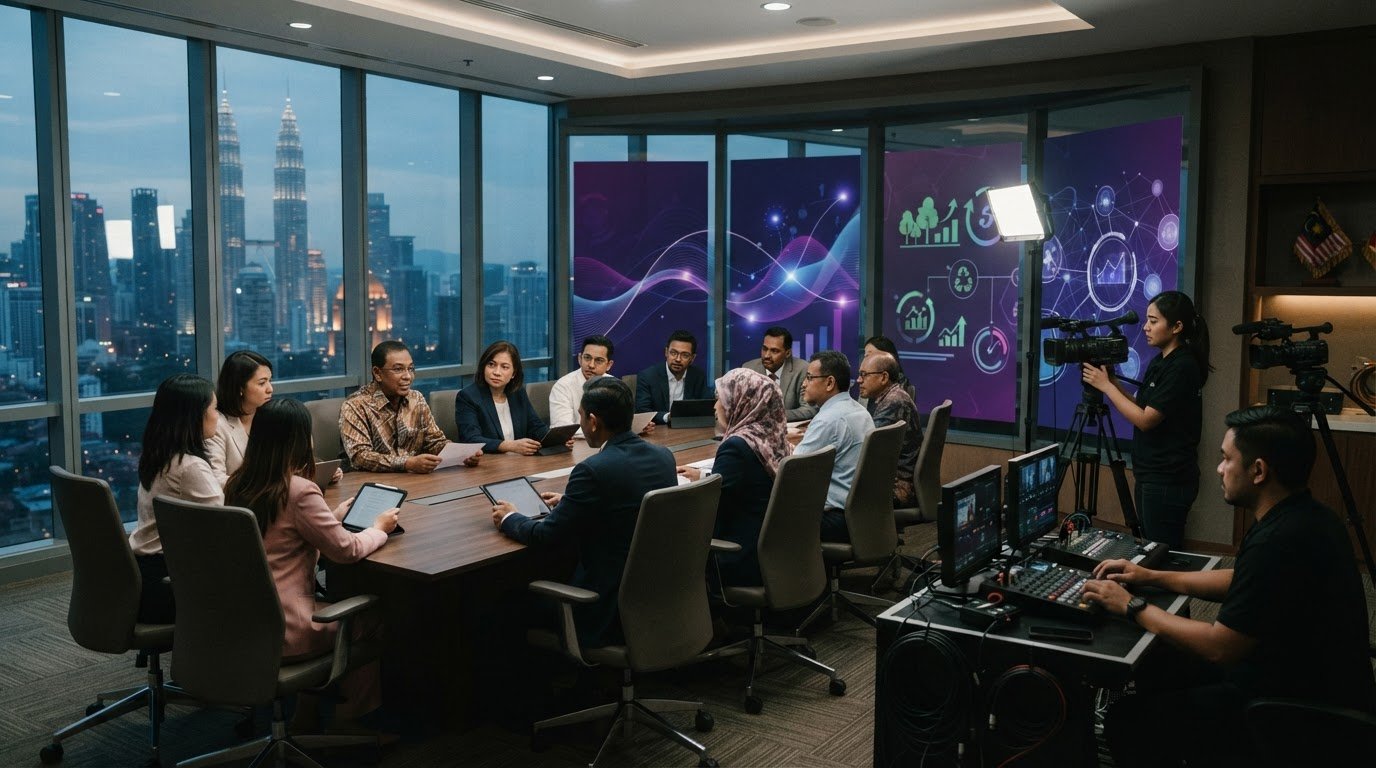
What if shareholders left your AGM remembering the company’s direction, not just the agenda? Dense financial and ESG information can be difficult to absorb during a live meeting, especially when presentations offer little context. A thoughtful video strategy for annual general meetings (AGM) can help connect the facts to the organisation’s priorities and make key messages easier to follow.
An AGM must cover essential business, but it can also give shareholders a clearer view of the company’s performance and plans. Video can support that goal when every asset has a defined purpose, uses approved information and fits the meeting format. It should complement formal reporting and shareholder dialogue, not replace either.
This guide explains how to shape an AGM narrative, use corporate and ESG video to support it, and apply 2D or 3D animation to clarify complex ideas. It also covers practical planning for in-person, hybrid and virtual meetings, from camera positions and playback checks to audience interaction. The aim is a coherent meeting experience that helps shareholders understand what the organisation is communicating and why it matters.
• Connect this year’s results to the organisation’s priorities and longer-term direction, while keeping all claims aligned with approved reporting.
• Use corporate and ESG video to give leadership messages and sustainability information clear context, not just visual polish.
• Choose an in-person, hybrid or virtual format based on shareholder needs, meeting goals and the technical experience the organisation can support.
• Plan your video strategy for annual general meetings (AGM) in stages, from narrative mapping through content creation, rehearsal and delivery.
• Use animation and virtual experiences where they help explain complex ideas or guide viewers through the programme. VISIOLAB provides corporate video services for organisations across Malaysia.
An AGM has formal responsibilities: shareholders hear from leadership, review company performance and take part in meeting business. Fulfilling those responsibilities is the starting point. Across in-person, virtual and hybrid formats, organisations can also use the meeting to communicate their direction and values more clearly. The Annual General Meeting (AGM) remains a formal shareholder meeting, so video should support its purpose rather than distract from it.
A sequence of speeches and dense slides may present facts without explaining how they fit together. A purposeful video strategy for annual general meetings (AGM) connects results to the decisions and priorities behind them. It can help leadership explain what changed, why it matters and how current work relates to future plans. Video doesn’t replace disclosure or shareholder dialogue. It gives complex information a visual structure and, where appropriate, a human voice.
Strategic video means shaping visual content around communication objectives while keeping it accurate, consistent with official materials and appropriate to the AGM format. This distinction matters for GLCs and other organisations communicating with varied stakeholders. The story should bring strategy into focus, not compete with formal reporting.
Digital access can make it easier for shareholders to follow meeting content when they can’t attend in person. But access alone doesn’t guarantee understanding. Visuals can clarify how priorities, progress and outcomes relate to one another. To make them useful, explain the context in plain language and ensure each chart or animation supports a specific point rather than serving as decoration.
For example, 2D or 3D motion graphics can show the stages of a complex operating model or sustainability initiative. Start by identifying the idea that viewers need to understand, then decide whether animation will make its sequence or relationships clearer than a spoken explanation or static slide. The goal isn’t to simplify the underlying facts. It’s to remove unnecessary friction so shareholders can focus on what the information means.
Video should complement, not replace, an organisation’s annual report and formal disclosures. Before production, confirm applicable Bursa Malaysia guidance and internal review requirements with the company’s governance and legal teams. Align scripts, graphics and figures with approved reporting so that the Chairman’s Statement and CEO’s Review gain context without introducing unsupported claims or inconsistent information.
Professional communication depends on restraint as much as visual craft. Use consistent terminology, legible data, considered pacing and a tone suited to the subject. Before approving a video, check that every figure can be read on the intended screen, every claim has been reviewed, and the content supports rather than contradicts official materials.
When abstract priorities need a tangible explanation, corporate and ESG video can bring people, evidence and strategic intent together. For organisations, the opportunity is to move beyond presenting information at an AGM and help shareholders understand the meaning behind it.
A strong AGM video plan is a connected narrative, not a playlist of unrelated assets. Each film or animation should answer a shareholder question: Where is the company heading? What progress has it made? How do its results connect to future priorities? A clear sequence might introduce leadership’s vision, show evidence of performance, then clarify information that is difficult to communicate in a slide or speech.
A CEO vision film can set the context for the coming fiscal year. Rather than repeating presentation slides, it can connect strategic priorities to the choices and milestones that will shape them. An operational montage can then ground the message in visible work, such as infrastructure, project progress or the people behind key initiatives. Select examples that relate directly to the message, confirm that they can be shared, and make their relevance clear to shareholders.
Text-heavy sustainability reporting can be difficult to absorb during a live meeting. An ESG video can turn approved metrics into a visual story: show the initiative, explain the measure and connect it to the organisation’s stated commitments. Documentary-style footage can add human context, but authenticity depends on accuracy. Use real examples and clear language, and don’t imply outcomes that the evidence doesn’t support.
Before scripting, agree on which commitments, activities and metrics the video will cover. Check the wording and figures with the teams responsible for ESG reporting, and make sure the visuals don’t suggest a broader impact than the approved information supports. The film should complement formal ESG disclosures, not stand in for them.
Financial results and technical achievements often involve relationships that are hard to explain on a slide. Animation can guide viewers through a process step by step. For example, 2D or 3D motion graphics can illustrate how a project operates, how a transformation is structured, or how different performance measures connect. Before production, map the sequence of ideas and identify what viewers should understand at each stage. Keep figures legible, label them clearly and align them with approved reporting.
Editing should give the sequence coherence: use measured pacing for financial detail, a human focus for leadership and ESG stories, and purposeful transitions between them. Visual polish matters when it helps viewers follow the message. Harvard Law School’s discussion of best practices for virtual shareholder meetings also points to the importance of designing digital meetings around participation, not simply transmission.
For organisations looking to connect complex strategy with clear visual storytelling, VISIOLAB’s corporate video and ESG video work offers a relevant starting point for shaping AGM content.
The right AGM format depends on who needs to participate and what the meeting must achieve. In-person meetings offer the energy of a shared room. Virtual formats can provide a designed digital experience for shareholders joining from different locations. Hybrid meetings combine both, with additional coordination between the venue and the stream. The OECD’s overview of global trends in shareholder meetings highlights why format choices should consider both technology and shareholder engagement.
A practical video strategy for annual general meetings (AGM) starts with the audience experience, then maps production around it. Compare formats by asking: Can shareholders participate in the way they need to? Can the organisation support the required technology? Will speakers, presentations and prepared videos work together? For any format, check current Bursa Malaysia guidance and the organisation’s governance requirements before confirming the meeting plan.
Hybrid production must serve two audiences at once. In the room, camera positions should capture speakers and key visuals without obstructing attendees. For remote shareholders, the stream needs a clear view of speakers, readable presentation content and consistent audio. A camera plan might include a wide room view and closer speaker coverage. Rehearse camera changes in the actual programme sequence so transitions don’t interrupt key messages.
Interaction needs equal attention. Decide how remote questions will reach the chair, how they’ll be queued alongside in-room questions, and how presenters will receive cues. Put these steps in the run-of-show and confirm who is responsible for each handoff. Test essential elements in advance, including video playback, presentation files, audio and the connection used for streaming. Prepare backup options, such as a secondary internet connection or a ready-to-use presentation file, so the team has a plan if a technical issue interrupts the live sequence.
A digital-only AGM shouldn’t feel like a camera pointed at an empty stage. A virtual environment can establish a coherent visual identity, guide viewers between agenda segments and give leadership films or data visualisations a deliberate place in the experience. Techniques used in virtual experiences can inform the design of a digital stage, while the AGM’s purpose and formal proceedings remain central.
Think of the screen as the venue: plan how shareholders enter, follow the programme and move between live speakers and prepared content. Test the viewing experience on relevant devices. Confirm how questions and voting are handled through the chosen meeting arrangements, and make support instructions easy to find.
In-person AGMs can also benefit from video. Large-scale LED content can frame key messages, while a launching video can introduce a strategic initiative. After the meeting, selected event coverage or a montage may support follow-up communication, subject to approval and disclosure considerations. For organisations planning a virtual AGM experience, VISIOLAB’s virtual experience work may help translate corporate intent into a considered visual environment.
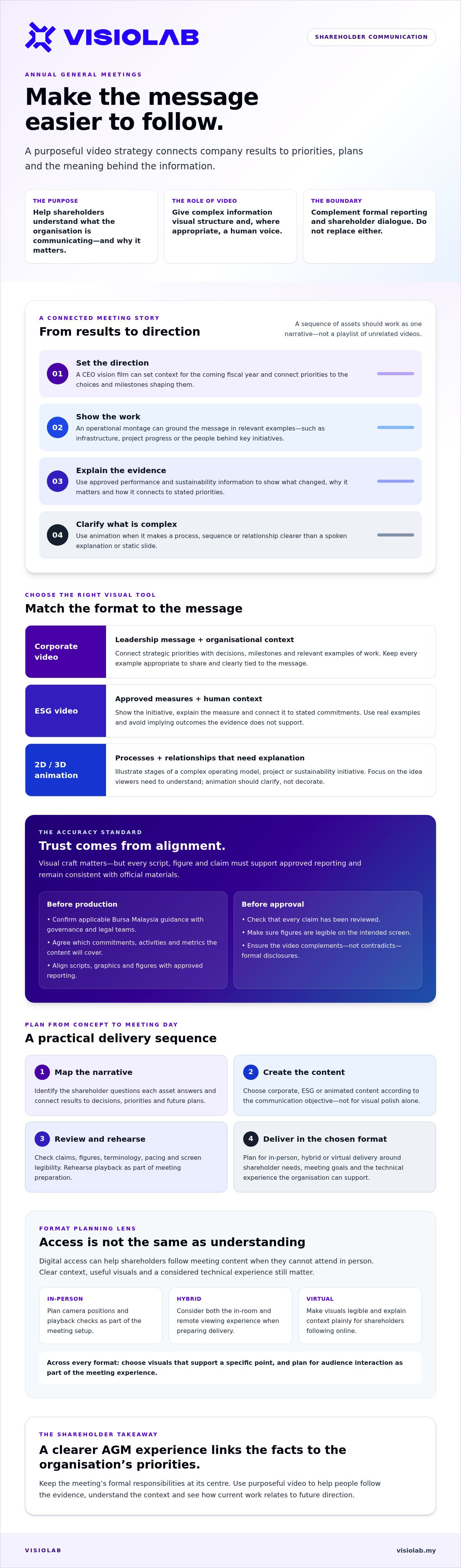
A compelling AGM film takes more than a last-minute script and a camera crew. The video strategy for annual general meetings (AGM) should connect the company’s central message, content plan and live delivery from the start. Work backwards from the meeting date, allowing time for approvals, production and technical testing. Before commissioning content, list the messages shareholders need to understand, the assets that could deliver them and the people responsible for reviewing each one.
Begin 4–6 months before the AGM. Corporate Communications, leadership and relevant subject-matter teams can identify the year’s primary narrative: what shareholders need to understand about performance, priorities and the road ahead. Agree on the main point of the meeting and the evidence that supports it. Then map each agenda segment to the question it should answer, so videos add context rather than repeat the same information. Set clear engagement measures, such as attendance, questions submitted and views of approved post-event recordings. A visual communication agency can help translate that narrative into a coherent visual plan.
With key messages agreed, develop scripts, visual direction and a production schedule for CEO films, ESG stories and animations. Confirm facts and figures with the teams responsible for the relevant disclosures. For complex data or organisational changes, map the information into a clear sequence before production begins. For each asset, specify its audience, purpose, duration and place in the programme. This helps the content support the same story without repeating the same message in different formats.
Build review into the schedule. Identify who checks the script, who verifies figures and who approves the final edit. Where footage includes people, locations or sensitive operations, confirm permissions before filming. Clear review responsibilities help prevent late changes from disrupting the programme.
Test the full programme in the format planned for the AGM. Check video playback, sound, presentation transitions, speaker cues and how remote questions will be handled. For a hybrid meeting, rehearse handoffs between the venue and the stream, including the transitions from a live speaker to a pre-produced video and back again. Confirm who can resolve playback or connection issues, and prepare approved backup files for essential content.
Use a run-of-show to coordinate speakers, video cues and transitions. A designated team member should track timing and communicate changes to the production crew. Make sure presenters know how to signal when they are ready for a video or when they need to move to the next segment. Event Coverage can document key moments, but recording should follow the organisation’s permissions, disclosure and retention practices. Keep attention on clear delivery for both in-room and remote shareholders.
After the meeting, review the recording and identify approved segments that can extend the narrative. A concise highlights montage can help stakeholders who missed the live session catch the central messages. Selected clips may also be adapted for appropriate corporate channels. Secure approvals before publishing, and retain final assets according to internal policy. That way, the AGM’s strategic story can inform communication beyond meeting day.
Planning an AGM narrative from discovery through delivery? Explore VISIOLAB’s corporate video and event coverage to consider how visual storytelling can support your meeting.
AGM video should do more than make a meeting look polished. It should help leadership communicate clearly, make complex priorities easier to grasp and give shareholders a consistent view of the organisation’s direction. VISIOLAB is a Malaysia-based strategic video agency serving corporate, GLC, MNC and government sectors. Its services include Corporate Video, ESG Video, Animations and Virtual Experience.
VISIOLAB’s work combines strategic planning and production to turn complex organisational messages into visual content. Its 2D and 3D motion graphics can help explain data, processes or initiatives. The aim is not to make important information look impressive at any cost. It is to make the meaning clearer while keeping the message aligned with approved corporate information.
Start with the communication challenge, then shape the visual solution around it. For an AGM, that could mean structuring a leadership film around the year’s strategic priorities, using animation to clarify a complex initiative, or connecting ESG stories to the organisation’s stated commitments. Each element should have a purpose and feel part of the same narrative.
That’s the difference between production for its own sake and intentional storytelling. VISIOLAB’s work with corporate, GLC, MNC and government organisations is focused on complex corporate communication. Teams can bring approved messages and reporting into the creative process, then develop visual assets designed to support shareholder understanding.
Start by identifying what shareholders should understand and remember after the meeting. Then consider which formats can best carry that message, whether a corporate film, ESG video, animation, event coverage or virtual experience. The right mix depends on the AGM’s goals, audience and delivery format.
A considered video strategy for annual general meetings (AGM) aligns narrative and execution: the story is clear, the visuals serve the message, and the technical plan supports the meeting experience. If you’re planning an upcoming AGM, discuss how VISIOLAB’s video services could support your communication objectives. Partner with VISIOLAB for your next AGM.
An effective AGM video strategy connects leadership’s vision to the evidence behind it. The right content can make ESG priorities and complex corporate information easier to understand, while a format planned around shareholder needs can create a coherent experience for in-person and remote audiences.
A considered video strategy for annual general meetings (AGM) also depends on clear goals, careful preparation and reliable execution. VISIOLAB works with organisations in Malaysia to shape corporate and ESG content, translating complex information into visual content through motion graphics, corporate films and virtual experiences.
From pre-produced films to virtual experiences, each element can support a consistent story before, during and after the meeting. Transform your AGM into a strategic asset with VISIOLAB.
Give shareholders more than information: offer a clear view of where your organisation is heading and why it matters.
Begin planning several months before the AGM, with four to six months providing a practical window for strategic discovery, approvals, filming, animation and revisions. Start by agreeing on the central narrative and the information that can be shared. Then build the production schedule around leadership availability and governance review. Hybrid or virtual elements also need rehearsal time, so don’t leave technical integration until content is complete.
Video can support clear communication, but it doesn’t ensure compliance or replace required disclosures. Use approved information and make sure films, graphics and spoken statements are consistent with official reporting. Before production, ask your company secretary, legal team or governance advisers to confirm current Bursa Malaysia requirements and review content. Treat video as a communication tool that complements formal materials, not as a substitute for them.
A basic live stream transmits the meeting. A strategic video approach plans how prepared films, presentations, speakers and audience interaction work together to communicate the company’s direction. It considers what shareholders need to understand, how complex information will be made clear and how remote viewers will experience the programme. The distinction is purpose: transmission delivers the event, while strategy shapes a more coherent shareholder experience.
Use 3D animation when spatial or technical relationships are difficult to explain with static slides. For example, it can illustrate how infrastructure operates, show stages in a complex process, or clarify how parts of an organisational initiative connect. Keep the animation tied to verified information, label important details and avoid visual effects that obscure the message. The purpose is to make complexity easier to follow, not to replace supporting data.
It can be, because a hybrid format may involve both the physical meeting setup and additional streaming, production and platform requirements. The final cost depends on the venue, technical scope, audience needs and systems already available to the organisation. Compare options against expected participation and communication goals, rather than assuming hybrid is automatically worthwhile. Confirm platform and production requirements early so the format fits the meeting’s purpose and resources.
Define success before production, then choose measures that match your goals. The video strategy for annual general meetings (AGM) might be assessed through attendance, remote participation, questions submitted, video views after the meeting, or feedback on how clearly key priorities were explained. Track measures consistently and interpret them in context. A high view count alone doesn’t prove shareholders understood the message or felt more confident about the company’s direction.
Choose ESG stories that connect approved sustainability information to real initiatives, people or operational changes. A focused video might explain a stated commitment, show how a programme works and present relevant metrics with clear context. Use authentic footage where appropriate, and verify every claim with the teams responsible for ESG reporting. Strong content makes evidence easier to understand without overstating impact or replacing the company’s formal disclosures.
VISIOLAB’s services include Corporate Video, ESG Video, Event Coverage and Virtual Experience, supporting both prepared content and event-related video needs. The agency also works with 2D and 3D motion graphics to clarify complex organisational messages. Discuss the AGM format, content requirements and live coverage needs with VISIOLAB to confirm the appropriate scope. Its work serves corporate, GLC, MNC and government sectors across Malaysia.
Let’s create and collaborate
We’re versatile multitaskers, and we thrive on a lot of projects. You've seen a few of our works that we are most proud of, and your project could be next in line.

Empowering brands with captivating visual stories, creating strong connections and growth.
