
Ninety-six percent of audiences have watched an explainer video to grasp a complex product or technical service. This is not just a preference: it is a demand for clarity. You've likely felt the weight of a technical briefing where the data is vital but the delivery is dry. When traditional methods...
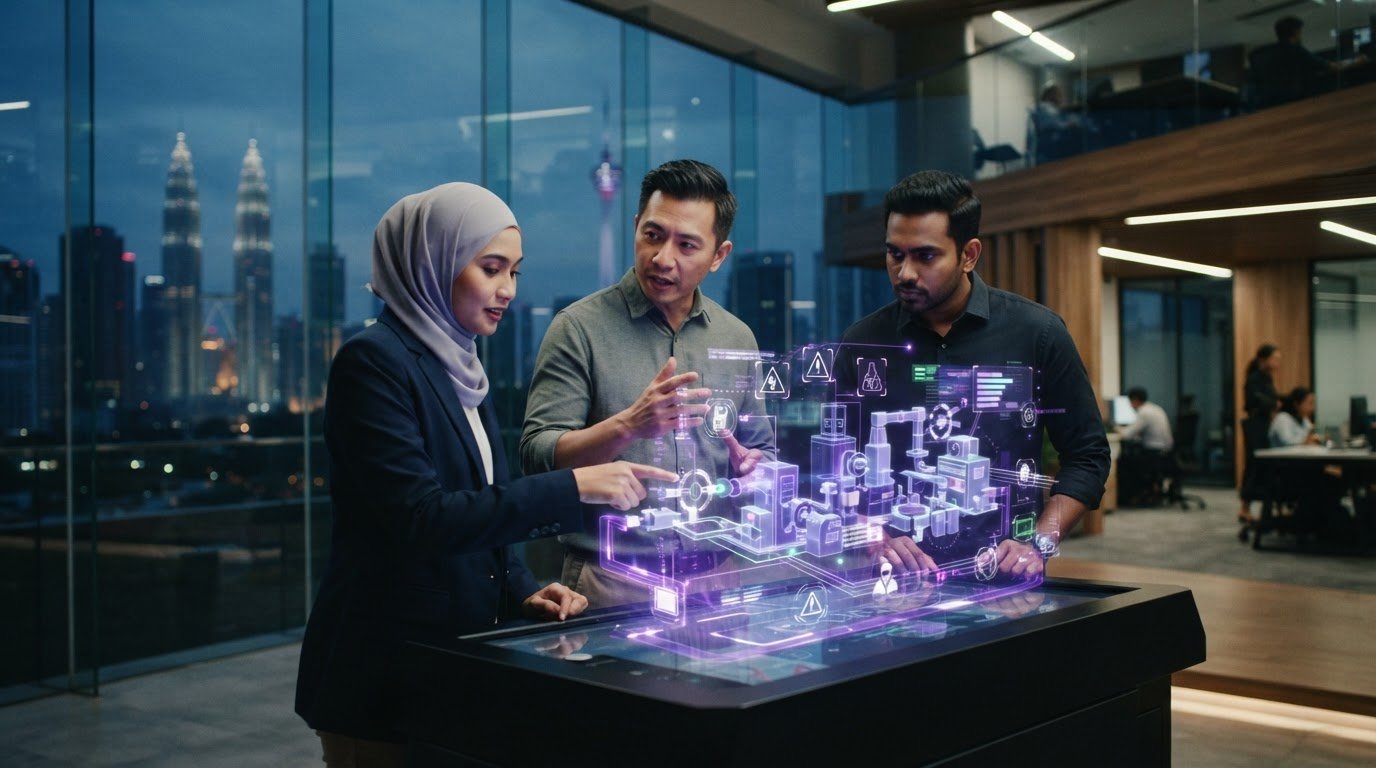
Ninety-six percent of audiences have watched an explainer video to grasp a complex product or technical service. This is not just a preference: it is a demand for clarity. You've likely felt the weight of a technical briefing where the data is vital but the delivery is dry. When traditional methods fail to explain abstract software or ESG data, using animation to simplify technical topics becomes your most effective strategic tool. We agree that your expertise deserves a better stage than a static slide deck. Complexity should invite curiosity, not confusion.
This guide promises to show you how to transform complex data into high-impact visual narratives that drive corporate understanding. You'll learn to bridge the gap between creative mastery and technical fluency. We provide a strategic framework for choosing between 2D and 3D animation, alongside methods to improve stakeholder buy-in for your most ambitious projects. From reducing the high costs of industrial filming to boosting retention for safety training, we'll explore how to build a visual perspective that leads to tangible results. The future of technical communication is visual, and the strategy starts here.
• Overcome the "Expert Blindness" trap by translating complex systems into intuitive motion graphics that resonate with non-technical stakeholders.
• Master the science of Dual Coding Theory to maximize audience retention by synchronizing visual metaphors with verbal data.
• Apply a strategic decision framework for choosing between 2D and 3D mediums when using animation to simplify technical topics for maximum clarity.
• Discover a two-phase audit process that identifies the "Core Truth" of your data before transforming it into a high-impact visual storyboard.
• See how to apply these visual strategies to high-stakes sectors like ESG reporting and safety training to drive measurable corporate engagement.
Technical animation is the strategic deployment of motion graphics to distill abstract systems into digestible insights. It acts as a bridge between raw data and human understanding. Many technical teams fall into the "Expert Blindness" trap; they are so immersed in the details that they lose sight of how a non-expert perceives the information. This creates a Technical Wall where communication stops and confusion begins. When experts assume foundational knowledge that isn't there, they inadvertently alienate their audience.
The core of this failure lies in cognitive load. When audiences face dense, static technical data, their brains struggle to process the volume of information. Using animation to simplify technical topics allows us to strip away visual noise and focus on the core message. By applying educational animation principles, we manage the viewer's mental bandwidth. This ensures that key information is retained rather than rejected. Animation doesn't just show what a system is; it explains what a system does.
In large-scale sectors like GLCs and MNCs, clarity is a financial imperative. Unclear briefings lead to project delays, misaligned expectations, and heightened safety risks. If a stakeholder cannot grasp the value of a technical proposal within the first few minutes, the project loses momentum. By 2026, the corporate landscape has pivoted toward visual-first communication. Decision-makers no longer have the patience for 50-page manuals. They demand high-impact clarity that drives immediate buy-in. Clarity accelerates decisions; confusion stalls progress.
Cameras have physical limits. They cannot film the internal logic of a cloud microservice or the microscopic stress points inside a subsea valve. Live-action is often cluttered with distracting background elements that dilute the message. Animation thrives where live-action fails. It provides a strategic focus that real-world footage lacks. If a project design changes, we update the digital model; we don't re-shoot the entire site. This flexibility makes using animation to simplify technical topics a more sustainable, long-term asset for industrial documentation. Where the camera stops, the animation begins. It transforms the invisible into the understandable.
The human brain is not a single-stream processor; it is a dual-channel engine. Dual Coding Theory reveals that we process verbal and visual information through separate, simultaneous streams. When you are using animation to simplify technical topics, you aren't just adding decorative movement. You are synchronizing narration with motion to double the brain's encoding power. Visual metaphors act as the essential bridge here. They translate invisible data into familiar shapes: a complex API pipeline becomes a flowing circuit; a cyber threat becomes a physical barrier. This translation makes the abstract tangible and the complex relatable.
Motion acts as a strategic spotlight. Selective attention allows us to use movement to pull the viewer's focus to a specific data point while dimming irrelevant details. This eliminates the visual noise that often plagues technical documentation. Beyond mere logic, animation provides the emotional resonance needed to humanize dry data. By giving a narrative rhythm to ESG metrics or safety protocols, we move the audience from passive observation to active connection. Data provides the foundation; narrative provides the perspective.
Visual hierarchy is the art of intentional exclusion. We strip away every non-essential bolt or line of code that doesn't serve the immediate message. This practice is central to cognitive load theory in multimedia learning, which teaches us that mental fatigue sets in when the brain is overwhelmed by extraneous data. We use "chunking" to break a ten-minute industrial process into sixty-second beats. Each beat builds on the last, creating a visual language that transcends technical jargon. This strategic approach to using animation to simplify technical topics ensures that your message isn't just seen; it's mastered.
Our survival instinct hardwires us to track movement. We utilize this biological reflex to build "Mental Models" that endure. Whether it is a schematic 2D flowchart or a photorealistic 3D assembly, transitions demonstrate clear cause-and-effect relationships. If component A rotates, component B reacts. This logical flow creates a memory that sticks long after the video ends. It transforms a fleeting briefing into a permanent asset. If you are ready to elevate your technical messaging, you can explore our strategic animation services to see these principles in action. Precision is the tool: clarity is the result.
Selecting the right medium is a strategic decision, not an artistic one. The choice between 2D and 3D depends entirely on the nature of the complexity you intend to solve. If your challenge is conceptual or data-driven, abstraction is your ally. If your challenge is physical or spatial, realism is your requirement. By building mental models through animation, we ensure that the chosen style serves the viewer's cognitive needs. Using animation to simplify technical topics requires a precise understanding of where the audience's confusion lies. We don't just choose a style; we architect a perspective.
2D motion graphics excel at mapping the invisible. When explaining software UI, complex API integrations, or intricate ESG data, 2D provides a clean, schematic clarity that 3D often complicates. It strips away the weight of three-dimensional space to focus on flow and logic. This style is particularly effective for explainer video production Malaysia where organizational hierarchies or sensitive corporate messaging need to feel approachable and professional. It turns dense spreadsheets into rhythmic visual beats. 2D is the language of systems and strategy. It simplifies by removing the irrelevant.
3D animation is the tool of choice for the physical world. For industries like Oil & Gas, medical technology, or large-scale infrastructure, 3D provides the necessary depth to communicate scale and mechanical articulation. It allows us to perform virtual cutaways of heavy machinery or simulate the internal stress of a structure. This level of detail is vital for construction progress video Malaysia, where stakeholders need to see the intersection of design and reality. 3D builds technical authority. It moves beyond what a product is to show how it works in a tangible, photorealistic environment. Using animation to simplify technical topics in these sectors often involves converting CAD files into high-impact narratives.
In many cases, the most effective solution is a hybrid approach. We might use 3D to show a physical product, then overlay 2D motion graphics to explain the underlying data or software logic. This synergy captures the best of both worlds: the authority of 3D and the clarity of 2D. The medium must always follow the message. Strategy dictates the style; results dictate the success. We bridge the gap between abstract requirements and impactful results.
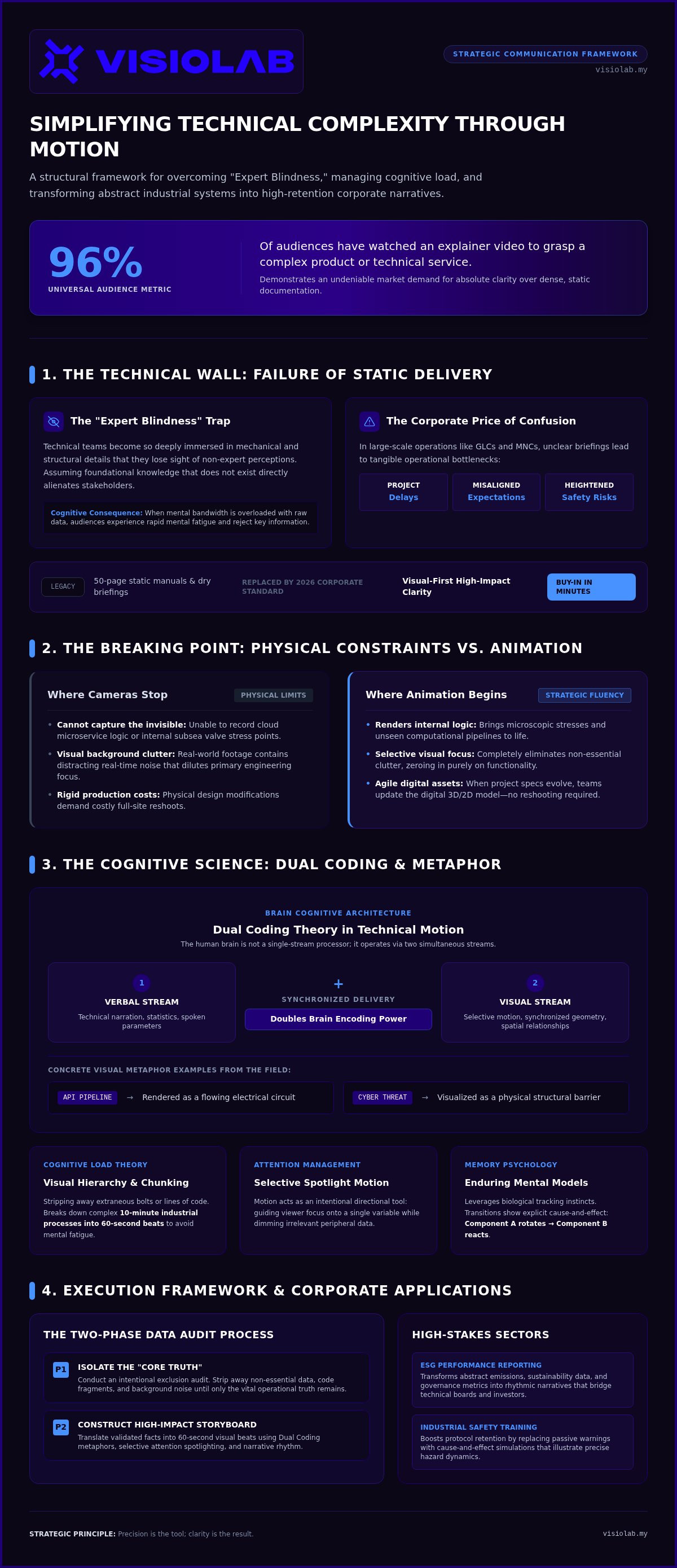
Execution requires a roadmap. Moving from raw data to a finished visual narrative is a process of intentional refinement. We approach this through a four-phase framework designed to ensure that using animation to simplify technical topics results in measurable impact. It begins with the Technical Audit. Here, we strip away the secondary details to identify the "Core Truth" of your message. What is the one thing your audience must understand? Once identified, we move to Abstraction and Storyboarding. We transform static data points into visual beats, ensuring the narrative flow remains logical and rhythmic.
The third phase is Style Alignment. We select a visual language that reflects your brand’s professional identity and the project's specific goals. A visionary corporate message requires a different aesthetic than a high-intensity safety induction. Finally, we engage in Iterative Refinement. This phase is critical for maintaining technical accuracy without compromising editorial clarity. We polish the visuals and timing until the complex becomes intuitive. This structured approach moves your project from a conceptual starting point to a final execution that commands attention.
Writing for the ear is fundamentally different from writing for the page. In the world of technical explainers, simple language always outperforms complex terminology. If a viewer has to pause to look up a word, you've lost their attention. We follow the "One Idea Per Scene" rule to prevent cognitive overload. Each visual beat must support a single, clear thought. This disciplined approach to narrative is central to the strategic role of a visual communication agency. We don't just narrate; we translate expertise into understanding.
Audio is the silent partner of visual clarity. It reinforces the motion on screen and provides the necessary context for complex transitions. The choice of voiceover tone is a strategic decision. An authoritative voice builds trust for industrial projects, while a peer-to-peer tone is often better for software training. We use subtle sound effects to highlight mechanical or digital actions, providing a sensory layer that aids memory retention. When sight and sound are synchronized, the message becomes indelible. If you are ready to transform your technical data, partner with us for your next technical animation project.
The theoretical framework finds its true value in execution. In the 2026 corporate environment, the demand for visual clarity has moved beyond marketing into the core of organizational operations. One of the most critical areas is ESG video production Malaysia. Sustainability reporting often involves dense, abstract data regarding supply chain footprints and decarbonization models. Using animation to simplify technical topics like Scope 3 emissions or green taxonomy compliance allows companies to present a transparent, auditor-ready narrative to stakeholders. It turns a dry compliance requirement into a visionary statement of purpose.
For MNCs and large-scale GLCs, internal communication is a challenge of scale. Animation provides a unified visual language that aligns global teams, ensuring that complex policy shifts or infrastructure updates are understood across every department. When launching "intangible" digital products or cloud services, motion graphics build the necessary hype by visualizing the invisible logic of the software. It creates a tangible sense of value before the user ever interacts with the interface. Perspective is everything; if they can see it, they can believe it.
Traditional safety manuals often fail because they are static and unengaging. Animated safety inductions solve this by providing high-retention visual training that standardizes safety protocols across national infrastructure projects. We can visualize "What If" scenarios, showing the exact consequences of procedural failure without putting human actors in real-world danger. This ability to show the hazard safely is why using animation to simplify technical topics is now a standard in high-hazard industries. It replaces 40-page PDFs with 90-second modules that personnel actually remember. Retention isn't just a metric; it's a safety requirement.
At VISIOLAB, we position ourselves as a strategic partner rather than just a production house. Our persona is that of a "Visionary Architect." We bridge the gap between creative mastery and technical fluency, ensuring that every frame serves a strategic purpose. Malaysian GLCs and MNCs trust us for high-stakes communication because we understand the gravity of their messages. We don't just animate; we architect clarity. If you're ready to transform your data into a high-impact narrative, partner with a strategic video agency in Malaysia to simplify your next technical challenge. Precision is the tool. Results are the goal.
Complexity is no longer a barrier to engagement; it's an opportunity for clarity. Throughout this guide, we've explored how a strategic framework transforms raw data into rhythmic visual narratives. By leveraging cognitive science and choosing the right medium, you bridge the gap between abstract systems and stakeholder understanding. Using animation to simplify technical topics isn't just about aesthetics. It's about ensuring your most critical messages are heard, understood, and retained across every level of your organization.
Since 2016, VISIOLAB has stood as a proven partner for Malaysian GLCs, MNCs, and government sectors. Our deep expertise in both 2D and 3D motion graphics allows us to handle large-scale organizational messages with surgical precision. We act as a visionary architect, ready to translate your technical requirements into high-impact results. If you're ready to break down the technical wall and drive corporate buy-in, transform your complex messages with VISIOLAB. Precision leads to perspective. Your expertise deserves to be seen with absolute clarity.
Most technical explainer videos achieve the highest engagement when they range between 60 and 90 seconds. While complex subjects might tempt longer runtimes, retention rates drop significantly after the two-minute mark. We focus on microlearning modules that isolate single procedures into digestible segments. This ensures the audience masters one concept before moving to the next, maintaining a high completion rate across corporate and government teams.
The choice depends on the nature of the complexity. 2D motion graphics excel at explaining abstract software logic, data flows, or organizational systems. Conversely, 3D animation is superior for industrial topics requiring spatial depth, such as subsea machinery or architectural progress. Using animation to simplify technical topics often involves a hybrid approach, where 3D shows the physical asset and 2D overlays explain the underlying data or logic.
Precision is vital, but clutter is the enemy of clarity. You should include enough detail to establish technical authority without triggering cognitive split-attention breakdown. We follow the "One Idea Per Scene" rule, stripping away non-essential visual noise to focus on the primary message. The goal is to build a mental model that sticks, allowing viewers to grasp the "why" and "how" without being buried in extraneous data.
Animation is a standard tool for safety inductions across Malaysia’s industrial and infrastructure sectors. It allows companies to visualize high-hazard scenarios, such as arc flashes or structural failures, without endangering human actors. These animated modules replace static manuals with high-retention visual training. This standardization ensures that every worker, regardless of their background, receives a consistent and clear understanding of vital safety protocols, reducing human error on-site.
A professional technical animation project typically spans four to eight weeks from the initial audit to the final delivery. Pre-production, including scriptwriting and storyboarding, accounts for roughly 30% of this timeline. This phase is critical for ensuring the narrative aligns with your strategic goals. Complex 3D industrial visualizations may require additional time for CAD file conversion and rendering, while 2D process explainers often move through the pipeline more rapidly.
Accuracy is maintained through a structured four-phase framework. We begin with a deep technical audit alongside your subject matter experts to identify the core message. Iterative refinement ensures that every visual beat accurately reflects the engineering or software logic. By positioning ourselves as a strategic partner rather than just a production house, we bridge the gap between creative mastery and technical fluency, ensuring the final output is both accurate and engaging.
While high-end 3D animation involves a significant investment, it's often more cost-effective than filming in hazardous or remote industrial environments. Animation eliminates the need for site permits, specialized equipment rentals, and travel logistics. Using animation to simplify technical topics provides long-term value; digital assets can be updated or repurposed as your technology evolves without the need for expensive re-shoots. It's an investment in a flexible, permanent communication asset.
ESG reporting often involves invisible data, such as carbon footprints or supply chain tiers. Animation transforms these abstract metrics into clear, auditor-ready visual narratives. We use synchronized data dashboards to walk stakeholders through complex decarbonization transition models and green taxonomy compliance. This turns a dry compliance requirement into a visionary story of corporate responsibility, making intricate sustainability data accessible and persuasive for investors and government regulators alike.
Let’s create and collaborate
We’re versatile multitaskers, and we thrive on a lot of projects. You've seen a few of our works that we are most proud of, and your project could be next in line.

Empowering brands with captivating visual stories, creating strong connections and growth.
