
The camera watching your construction site most closely may still be the wrong one for showing how the project changed. That’s the key distinction in construction timelapse vs site CCTV: one creates a visual record of progress over time; the other helps teams observe site activity and review recorde...
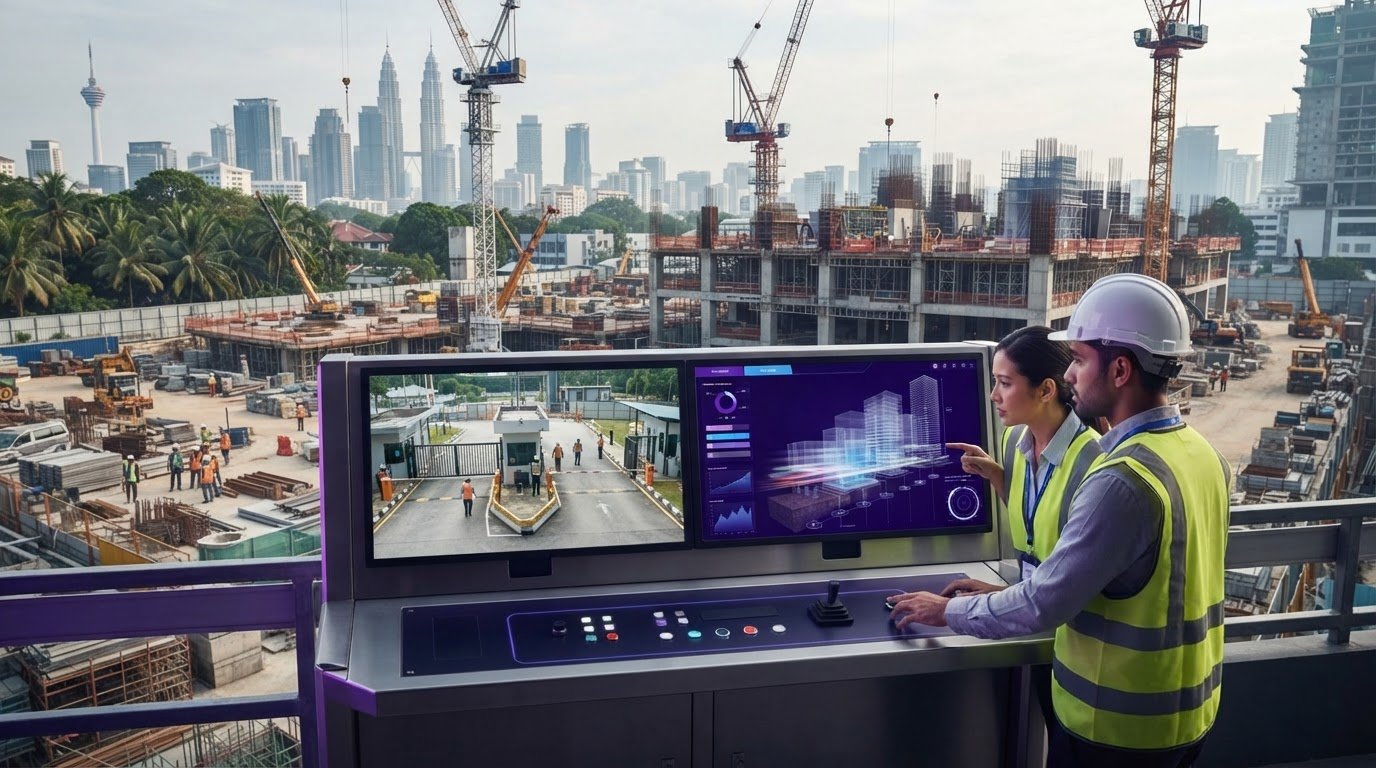
The camera watching your construction site most closely may still be the wrong one for showing how the project changed. That’s the key distinction in construction timelapse vs site CCTV: one creates a visual record of progress over time; the other helps teams observe site activity and review recorded footage.
It’s understandable to wonder whether CCTV footage can do both jobs. A security feed may show what happened in a particular area at a particular moment, but it doesn’t automatically create a clear, consistent story of a project taking shape. If you need to communicate milestones to clients, stakeholders or your wider team, the way images are captured matters.
This guide explains what construction timelapse and site CCTV each capture, where their purposes differ, and how to match them to your project’s operational and communication goals. You’ll also see when the two approaches can work together, rather than asking one camera system to meet every need. With a clear visual plan, site activity can be observed while project change becomes a lasting, useful record.
• Construction timelapse vs site CCTV comes down to the outcome you need: ongoing observation of selected site areas or a clear record of progress over time.
• Compare how each approach captures and delivers information before choosing a camera plan for your project.
• Start with what stakeholders need to see, then factor in project duration, viewing needs and the intended final output.
• Timelapse and CCTV can serve different purposes on the same project, supporting both site awareness and progress communication.
• A project-led timelapse plan can turn consistent imagery into a stronger progress record and a more compelling story.
A construction site generates different kinds of visual information. Teams may need to check activity around an access point, or they may need to show how a structure changed from groundwork to completion. CCTV supports observation; timelapse makes change visible over time. Some camera systems can support both functions, but the capture plan and final output determine what the footage is useful for.
Site CCTV is a monitoring approach. Depending on the installed system, teams may view footage live, review recordings, or do both. It can help with awareness of activity and access, as well as operational review after an event. The view is limited to the camera’s position and coverage: a camera aimed at a gate won’t show work outside its frame. Live viewing and recording also depend on how the system is configured.
Construction timelapse uses selected images captured at intervals and assembled to show visible change across a period. It turns a project’s gradual progress into a visual timeline. The technique builds on time-lapse photography, where images captured over time are played back to make slow change easier to see. It creates a progress record, not a live view or an incident-replay tool.
The difference is clearest in the questions each output answers. CCTV footage can help teams review what was visible in a covered area at a particular time. A timelapse can help viewers understand what changed between project stages: where the structure expanded, how the site transformed, and how separate phases came together. One supports closer observation of activity; the other gives the project a wider sense of movement.
That distinction matters when planning cameras. For operational awareness, teams need to identify which areas and activities should be visible. For progress documentation, they need a consistent viewpoint that makes change legible across the project period. A camera feed alone doesn’t create a polished, coherent progress story. Timelapse depends on selecting and assembling images that form a useful record.
In practice, construction timelapse vs site CCTV isn’t always an either-or choice. A project may need CCTV for site observation and a separate timelapse approach for documenting progress. Treating them as distinct tools helps avoid asking one camera setup to serve two different purposes, and makes it easier to plan visual information around the people who need to use it.
The workflow starts with the question the images need to answer. For a progress film, a camera position is chosen to keep key parts of the build visible. Images are then captured on a planned schedule, reviewed for consistency and assembled into an edited sequence that shows the project’s development.
For CCTV, the first priority is coverage of the areas teams need to observe. Depending on the system, footage may be available for live viewing, recording and later review. Its output is shaped by camera placement and system configuration, rather than by a sequence designed to tell the project’s story. These tools can support project monitoring in different ways, each with a distinct role in the wider process.
Timelapse images captured periodically compress visible change into a shorter sequence. The capture schedule affects what viewers can follow: too little visual continuity can make stages feel disconnected, while a considered interval can reveal progress without showing every moment. A consistent viewpoint also makes comparisons between project phases easier.
CCTV is generally configured to help teams observe activity across selected areas, with live access or footage review available where supported. It may capture far more moments, but its coverage remains limited to the camera’s view. Changing site conditions matter for both approaches. New structures can obstruct a viewpoint, camera movement can disrupt visual consistency, and power or connectivity outages can interrupt capture or access. Storage capacity and review processes also affect how useful images remain over a long project.
The capture plan determines whether the output serves monitoring or visual storytelling. Live viewing and footage review can help teams check activity in covered areas. A progress film is shaped through image selection, consistent framing and editing, creating a shareable record for stakeholders who need to understand how the build has changed.
Neither output is more valuable in every situation. Operational footage and a polished progress film answer different questions, and a project may need both. Decide who needs access to live or recorded views, who needs a concise progress update, and how the selected images will be reviewed and used. A well-planned construction progress documentation approach can align capture with the communication outcome, while CCTV remains focused on site observation.
The best choice depends on the information your team needs. In the construction timelapse vs site CCTV decision, CCTV is the closer fit for observing activity in covered areas, while timelapse is designed to show how a project changes over time. Compare the intended use and output, not just the presence of a camera.
| Project need | Site CCTV | Construction timelapse |
|---|---|---|
| Primary purpose | Observe activity in selected site areas | Show visible progress across a project period |
| Capture approach | Live viewing or recording, where the system supports it | Images captured at planned intervals from a chosen viewpoint |
| Typical output | Live camera views or footage for review | A visual sequence or edited progress film |
| Core audience | Teams who need site awareness or footage review | Stakeholders who need to understand project change |
| Review use | Check activity in the camera’s coverage area | Follow milestones and communicate transformation |
CCTV may suit a project where teams need visibility of activity around a gate, delivery area or other selected location. If the system records footage, teams may also be able to review what was captured in the camera’s view. That operational visibility differs from a finished progress narrative: it helps people observe activity, but doesn’t automatically explain how the whole build developed. Camera footage alone also doesn’t guarantee security or safety outcomes, and it doesn’t replace site procedures or management.
Timelapse is a strong fit for a long-duration build where stakeholders need to see milestones unfold, from early site works to a structure taking shape. Keeping a consistent viewpoint helps viewers compare stages and understand the scale of the transformation. VISIOLAB’s construction progress video documentation combines planned capture with a clear visual record to support project communication.
Neither approach replaces project controls, safety procedures or active site management. They contribute different forms of visual information. CCTV can support operational observation, while timelapse creates a coherent record for communication and reflection. Used together, they can serve both needs without forcing one system to do two different jobs.
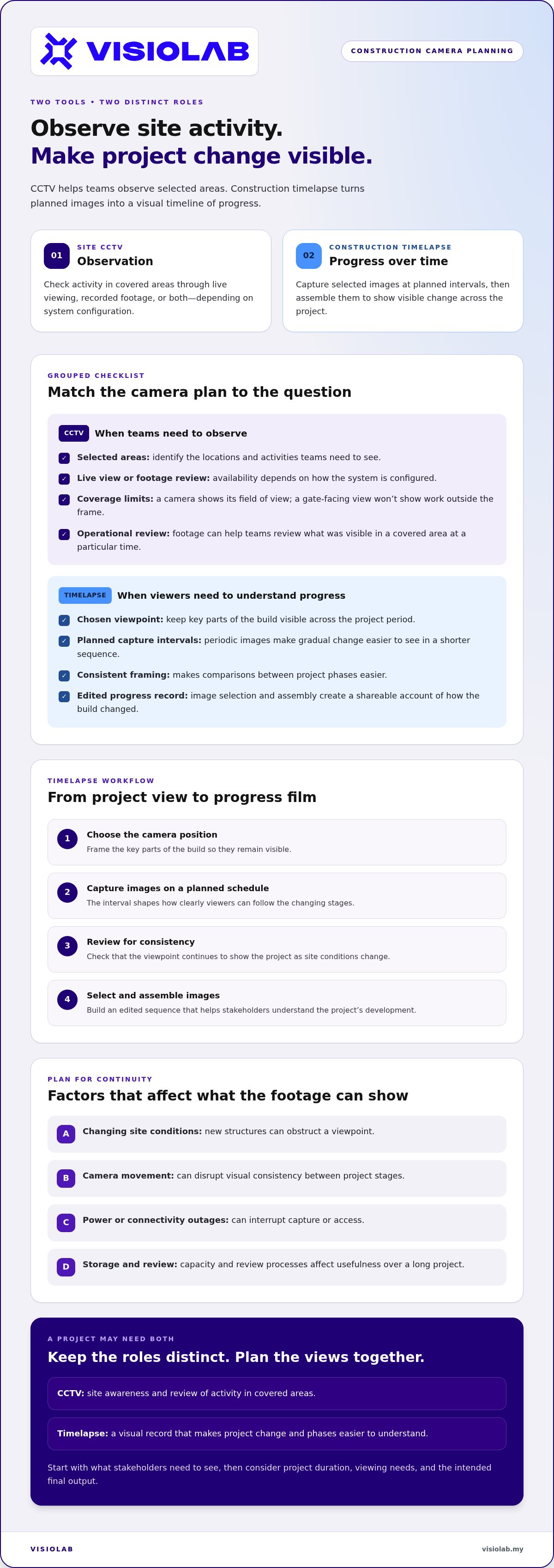
Choose the camera approach by starting with the decision the images need to support. For construction timelapse vs site CCTV, the useful question isn’t simply which system captures more footage. It’s who needs to see what, and what they need to do with that information.
A site team may need to observe activity in a specific area. A project owner may want a clear view of progress, while wider stakeholders may need milestone updates they can understand without reviewing raw footage. Define the audience first, then set capture, viewing and review requirements around its needs.
Use this sequence to turn the project objective into a practical plan:
Decide whether the priority is observing site activity, understanding visible progress, or communicating milestones. If the project needs both operational visibility and a lasting progress record, plan complementary approaches.
A build that unfolds over an extended period may benefit from planned timelapse capture showing change between key phases. For time-sensitive site observation, consider whether the CCTV setup supports the live viewing or footage review the team needs.
Decide whether users need access to camera views, footage for operational review, or an edited visual record for stakeholder communication. This affects how imagery is selected, reviewed and shared.
For timelapse, keep important parts of the build visible from a consistent angle and choose an image schedule suited to the pace of change. For CCTV, position cameras around the areas teams need to observe. Account for access, power, connectivity and weather exposure.
Construction layouts shift. Check whether new structures, equipment or temporary works could obstruct the view, and build in a process for reviewing image continuity. Decide who will review the imagery and how useful records will reach their intended audience.
The right plan may serve one purpose or combine approaches. If the need is limited to site observation, focus on coverage and viewing. If the goal is a coherent record of progress, plan consistent timelapse capture and a clear final output. If both needs matter, keep the roles distinct so operational viewing and visual storytelling each serve their purpose.
For a project-led approach to construction progress documentation, plan the viewpoints and imagery around the story stakeholders need to see.
Construction timelapse works best as a planned visual record, not a substitute for CCTV. The difference in construction timelapse vs site CCTV is also a difference in purpose: CCTV supports site observation, while a project-led timelapse shapes imagery into a story of change. VISIOLAB provides construction progress documentation and long-term timelapse, bringing capture planning and visual communication together so the record can serve the project beyond the camera feed.
Every build has its own sequence of visible milestones. Early site activity, structural work and later stages each change what matters in the frame. Planning around those shifts helps keep the viewpoint relevant as site conditions evolve, while consistent imagery gives viewers a clearer basis for following transformation over time.
The intended audience matters too. A project owner may want to understand progress at a glance; a wider stakeholder group may need a visual narrative that makes the scale and sequence of work easier to grasp. VISIOLAB aligns its documentation approach with that communication purpose. For infrastructure projects, drone visuals can add a broader perspective alongside ground-level imagery when the project calls for it.
For a deeper look at how these approaches fit together, explore the construction progress and long-term timelapse guide. The focus is not simply on collecting images. It’s on creating a considered record that reflects the project’s development.
Selected imagery can make stakeholder updates more tangible, showing visible changes between project stages instead of relying on descriptions alone. With the right planning, accumulated images can also contribute to a final progress film, bringing the project’s journey into view. The material can support communication without being confused with operational CCTV footage or presented as a replacement for project records and site management.
This is where construction documentation connects with broader video strategy. A clear audience, message and intended use help shape how project imagery supports the wider communication plan, including strategic corporate video production in Malaysia. VISIOLAB combines strategy with production discipline to make visual documentation purposeful as well as clear.
Give your project a visual record shaped around its milestones and audience. Plan construction progress documentation with VISIOLAB.
The choice in construction timelapse vs site CCTV starts with the information your project needs. CCTV supports observation of site activity where cameras provide coverage; timelapse creates a visual record of change across the build. If you need both operational visibility and a story stakeholders can follow, the approaches can complement each other.
Plan around the audience, project duration, viewpoints and intended use of the imagery. A consistent capture plan can turn construction progress into a useful communication asset, not just a collection of footage. For infrastructure projects, drone visuals can add a broader perspective to the documentation.
VISIOLAB provides construction progress documentation and long-term timelapse, combining strategic thinking with disciplined production. Plan construction progress documentation with VISIOLAB and give your project a clear visual record built around its story.
No. Site CCTV is used to observe activity in selected areas through live viewing or recorded footage, where the system supports those functions. Construction timelapse captures selected images over time and brings them together to show visible project change. The distinction is the intended use: CCTV supports site observation, while timelapse creates a visual progress record. Some systems may offer overlapping features, but their outputs aren’t automatically interchangeable.
Sometimes, if the CCTV system can capture or export images at intervals. Those images may be assembled into a timelapse, but footage designed for site viewing may not provide the consistent viewpoints or image selection needed for a clear progress film. The result depends on camera placement, capture settings and continuity. For a planned record, define the intended output before relying on CCTV footage to show the build over time.
For communicating visible change across project stages, construction timelapse is generally the closer fit. It turns selected images into a sequence that helps viewers follow the build’s development. CCTV is more useful when teams need to observe activity in covered areas or review footage where recording is available. The right choice depends on what “tracking” means for your project: following milestones or checking site activity.
Not by itself. Construction timelapse documents change through images captured at planned intervals, then reviewed or assembled into a visual record. It isn’t a substitute for a live camera view or footage review. If teams need immediate visibility of site activity, use a monitoring system configured for that purpose. Timelapse serves a separate role by showing how the project develops over a longer period.
It needs planning around the project’s duration, important milestones and intended audience. Choose a viewpoint that keeps key parts of the build visible, and set a capture schedule suited to the pace of change. Also consider power, connectivity, storage, weather exposure and shifting site layouts. Assign someone to review image continuity so obstructions, camera movement or outages can be identified before they weaken the visual record.
Yes. The two approaches can complement each other if the project needs both operational observation and a visual progress record. CCTV can support viewing or footage review in selected areas, depending on how it’s configured. Timelapse can document visible changes across project stages for stakeholder communication. Define each system’s purpose, audience and review process so neither is expected to replace the other or perform a role it wasn’t planned for.
It should capture a clear, consistent view of the work and the parts of the site that reveal meaningful progress. Frame the areas where visible changes will occur, while considering whether buildings, equipment or temporary works could block the view as construction advances. The best viewpoint depends on the project and its communication goals. A useful image sequence helps viewers compare stages and understand the transformation, rather than simply showing an active site.
Let’s create and collaborate
We’re versatile multitaskers, and we thrive on a lot of projects. You've seen a few of our works that we are most proud of, and your project could be next in line.

Empowering brands with captivating visual stories, creating strong connections and growth.
