
Three minutes on screen doesn’t automatically mean a small production. To understand how much a 3-minute corporate video costs in Malaysia, look beyond runtime: the format, filming needs, animation, and editing all shape the scope.It’s understandable to want a clear budget before committing. The pri...
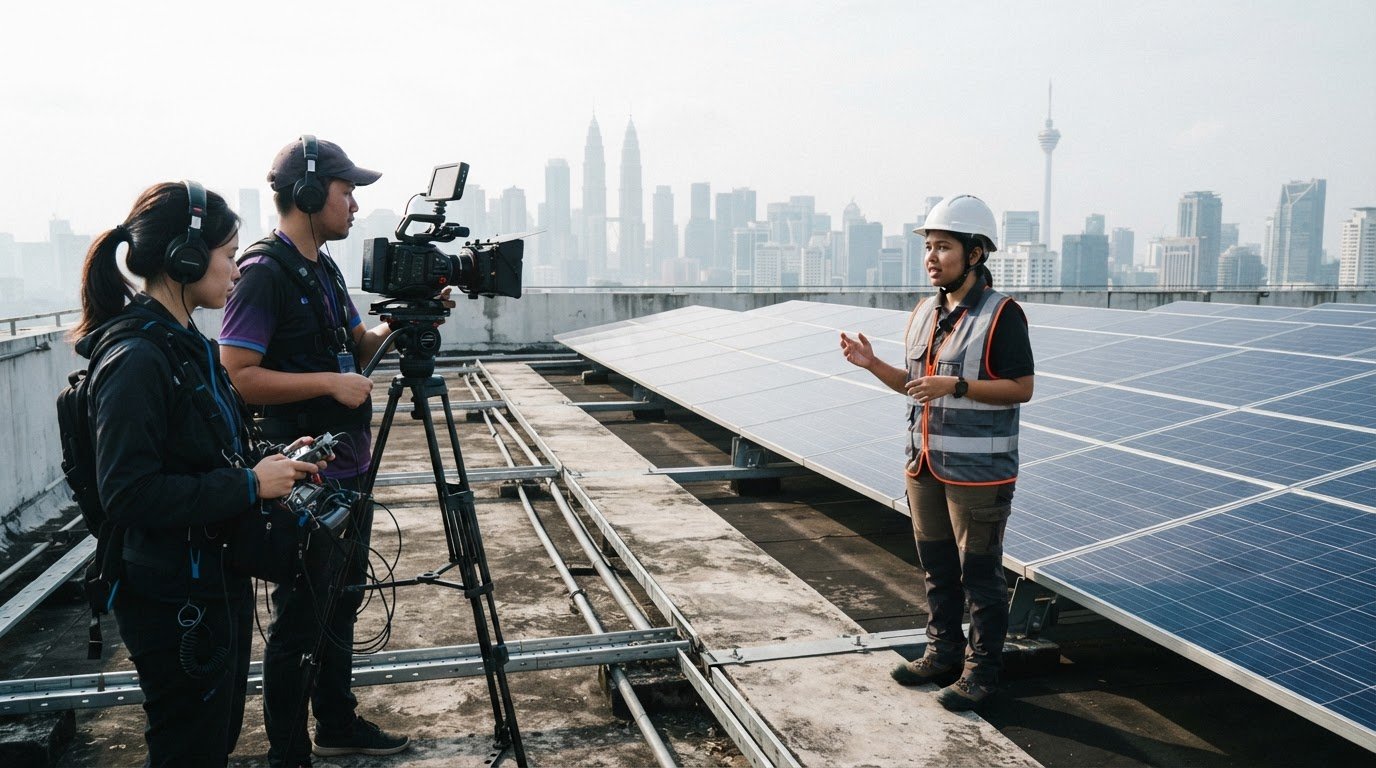
Three minutes on screen doesn’t automatically mean a small production. To understand how much a 3-minute corporate video costs in Malaysia, look beyond runtime: the format, filming needs, animation, and editing all shape the scope.
It’s understandable to want a clear budget before committing. The price depends on the project, and a quote is provided after a request; key cost factors include the creative approach, production requirements, and post-production work.
This guide explains what drives corporate video costs, how per-project and ongoing pricing models compare, and what to consider when budgeting for a 2-3-minute video in Malaysia. You’ll get a clearer view of where production effort goes, why two videos of the same length can require very different scopes, and how to match the format to your communication goal.
• Video length is only one part of the budget; production scope and post-production needs also shape the total.
• Compare in-house and agency production by weighing internal resources against the creative and technical work required.
• On-screen talent and voice-over affect both the production plan and the way your message reaches its audience.
• Per-project, retainer, and subscription pricing suit different production rhythms and content needs.
• Choose a video format around your communication goal, since interviews, animation, and training videos involve different production demands.
A corporate video quote depends on its scope, and pricing is provided after a quote request. Production approach, crew, talent, locations, and post-production all shape the work. For a three-minute film, runtime alone doesn’t reveal how many production decisions sit behind the finished edit.
In-house production uses a company’s staff and equipment; an agency brings dedicated production expertise and execution. The choice matters because internal capacity affects which tasks a project can absorb.
For example, a team with interview experience might film a straightforward staff update internally. A brand film with scripted scenes, multiple locations, and custom graphics needs more coordination across planning, filming, and editing. An agency can organize those elements together, while in-house production keeps the work with employees. The right approach depends on the project’s creative and technical demands.
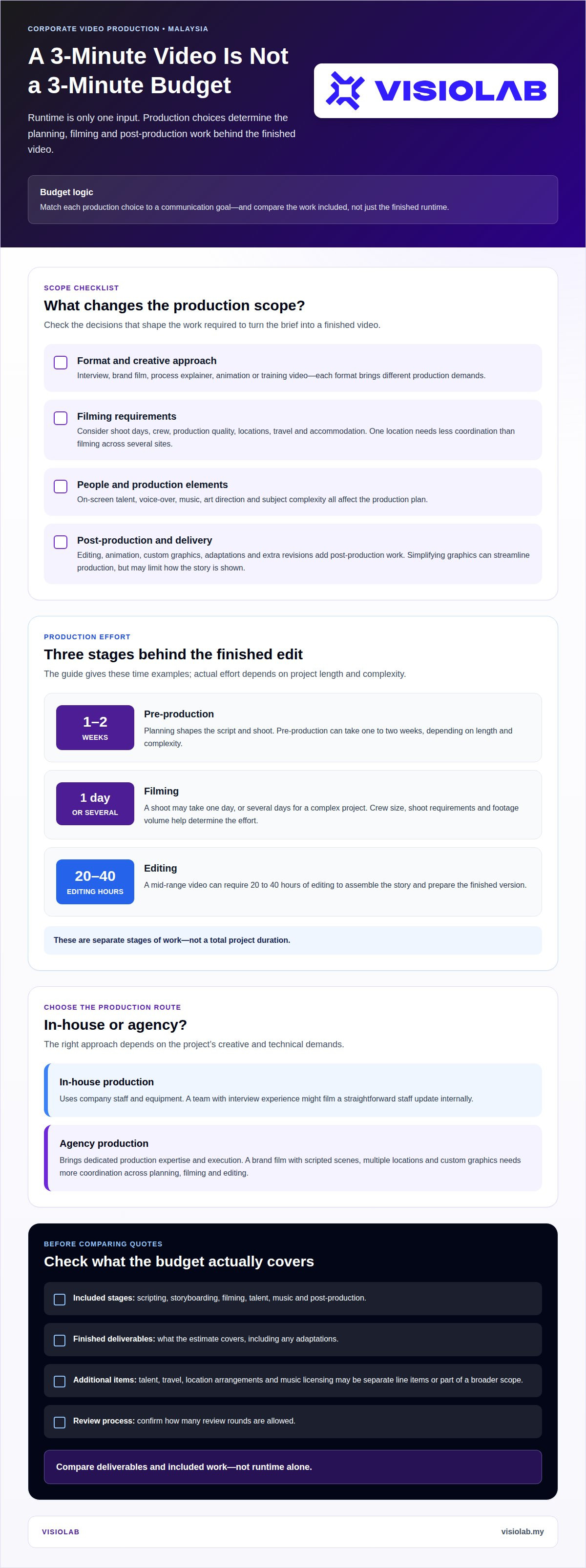
Production pricing reflects the work needed to turn a brief into a finished video. Factors include duration, shoot days, production quality, talent, music, locations, animation, subject complexity, art direction, editing, adaptations, travel, and accommodation.
Each choice changes the scope. A single-location interview avoids the coordination of filming across several sites; custom animation creates a different post-production workload than illustrative footage. Reducing locations or simplifying graphics can streamline production, but may also limit how the story is shown. A useful estimate connects each production choice to a clear communication goal.
A production budget groups the work needed to create and deliver a video, from early planning through final editing. The estimate should make clear whether scripting, storyboarding, filming, talent, music, and post-production are included.
Consider a two-to-three-minute company introduction built around one interview. Its scope may include planning, filming, licensed music, editing, and a defined review process. Add multiple locations, actors, or custom graphics, and the production plan changes. Compare budgets by deliverables and included work, not just the finished runtime.
Crew, editing, and pre-production costs reflect distinct stages of video production. Planning shapes the script and shoot; the crew captures footage; editing assembles the story and prepares the finished version.
Pre-production can take one to two weeks, depending on length and complexity. Filming may take one day or several days for a complex project. A mid-range video can require 20 to 40 hours of editing. Crew size, shoot requirements, and the volume of footage help determine the effort involved, so a quote should distinguish these stages.
Additional costs may apply for on-screen talent, voice-over, travel, location arrangements, music licensing, and extra revisions. These items can appear as separate line items or within a broader scope, depending on the project.
Before accepting a quote, check which finished deliverables it covers, which production stages are included, and how many review rounds are allowed. Clarify whether talent, travel, locations, and music licensing are included or billed separately.
Talent costs depend on the role, recording format, and how the finished video will be used. A presenter speaking directly to camera needs a different production setup from a voice actor narrating footage or graphics. Separate talent from filming and editing in the quote breakdown, so each cost relates to a clear part of the project.
On-screen talent delivers the message in the frame; voice-over talent records narration for the edit. The choice affects the script, filming plan, and final format. For example, a leadership message may rely on a company spokesperson, while a process explainer may use voice-over alongside diagrams.
Voice-over work can range from a short narration to a full script recording. The required read, recording conditions, direction, and usage terms all influence the scope. For on-camera work, the brief should define the role, wardrobe expectations, location, and whether the person must deliver scripted lines or speak naturally. Each detail shapes preparation and filming time.
Before production, identify who speaks and what the audience needs to understand. A subject expert may bring direct knowledge, while a professional presenter may suit a more formal brand vision. For narration, decide whether the voice should sound conversational, instructional, or authoritative. These choices help align casting with the message rather than treating talent as a last-minute addition.
Freelancers may price video production by the hour or by the project. Hourly billing suits defined tasks, such as recording voice-over or editing a short sequence; a project fee can make more sense when the deliverables and scope are agreed upfront.
Ask what the quoted hours cover: preparation, recording, direction, revisions, or delivery of the final audio. For example, a narration quote that covers recording but excludes script changes differs from one that includes a directed session. A clear breakdown makes the format easier to compare and helps prevent unrelated tasks from blending into one rate.
A videographer’s day rate generally relates to filming time and the production setup. A single-camera interview has different needs from a shoot requiring several scenes, lighting changes, or multiple speakers. The number of locations and the planned shot list also influence how the day is organized.
For a practical comparison, outline the filming action: interview, product demonstration, or workplace scenes. Then clarify whether the rate covers camera operation only or also preparation and equipment. Keep editing as a separate line unless the quote explicitly includes it. This distinction helps businesses compare a day of filming with a complete finished video.
For a corporate video, matching the voice and talent to the message can make production decisions clearer. Explore corporate video production as an approach for connecting the story, filming, and final format.
Pricing models determine how production work is scoped and paid for. For a three-minute video, the right structure depends on whether the need is one defined project or an ongoing stream of content.
A three-minute video is priced around its production scope, not runtime alone. The length gives a useful starting point, but a live-action marketing film and an animated explainer can require very different workflows. A quote depends on the case and is provided after a quote request; the factors include format, filming, animation, motion graphics, editing, and deliverables.
For example, one three-minute video might use interviews and existing workplace footage. Another might need a script, a studio session, custom animation, and several editing stages. Both have the same finished length, but their production plans differ. A focused corporate video keeps the concept and execution streamlined, while a more involved story adds creative and technical work.
Before comparing estimates, identify what each includes. Check whether planning, filming, talent, music, editing, and final exports sit inside the project scope. Also clarify whether the finished video includes alternate formats for different marketing channels. A single master edit and several platform-ready versions are different deliverables, even if they share one core story.
Project-based pricing sets a defined scope and fee for a specific production. It suits a one-off corporate announcement, product launch, or explainer when the deliverables and approval process can be outlined before production begins.
The quote should connect each production stage to an outcome: a script and storyboard establish the story, filming captures the material, and editing shapes the finished piece. For example, a launch video may need product demonstrations and motion graphics, while an interview-led project may focus on filming and editorial structure. That breakdown makes the project easier to manage.
A retainer or subscription instead organizes recurring content over an agreed period. It can suit a marketing team that regularly needs training videos, explainers, or social edits. The value comes from planning a consistent workflow, not assuming every video has identical needs. An animation-heavy month, for instance, may require a different scope than a series of straightforward interviews.
Choose a model based on the work your team needs. One campaign often fits a single project; recurring content may benefit from a continuing arrangement. In either case, define the video format, approval stages, revisions, and final files before production starts. Clear scope aligns the budget with the work, rather than runtime alone.
Video type changes the work behind a finished corporate film, so runtime alone can’t define production cost. A three-minute interview, animated explainer, and event recap may need different planning, filming, graphics, and editing. Compare the production scope and deliverables for each format, not just its duration.
A talking-head or interview video centres on a speaker and a clear message. Its scope may include a script, camera setup, lighting, sound, and editing. For example, a leadership interview filmed at one office differs from a multi-location story featuring several employees. The number of speakers, locations, and scenes affects the filming plan and edit.
An animated explainer uses illustrations or motion graphics to make processes easier to follow. Its production requires shaping the message into scenes, designing graphics, and animating them to match narration. A simple diagram sequence differs from a custom visual story with detailed movement. The scope depends on the visual style, script complexity, and how much information each scene must communicate.
Training and safety videos focus on clear instructions and repeatable messages. A demonstration may need a presenter, workplace filming, and carefully sequenced actions. A safety scenario with actors, props, or multiple camera angles brings additional coordination. For example, showing one procedure in a controlled setting has different requirements from illustrating several situations across a working site.
Event recaps and launch videos have their own production demands. An event recap may require filming across scheduled moments, then selecting highlights for a concise edit. A product launch may add demonstrations, interviews, or animated graphics. Travel between locations, access arrangements, and the timing of important action can affect the production plan.
Homepage videos and ESG stories also vary in scope. A homepage film may combine interviews, workplace footage, and brand graphics. An ESG video may need interviews and visuals that explain an organization’s initiatives. The number of contributors, locations, and story elements influences filming and post-production. Each added scene should support the central message.
Use this breakdown to assess the video production cost for a specific format:
Consider speakers, locations, lighting, sound, and the number of edited segments.
Define the script, visual style, graphics, narration, and scene complexity.
Map each instruction or action, then account for presenters, actors, and filming conditions.
Identify key moments, travel needs, demonstrations, and delivery formats.
Revisions, alternate edits, and added graphics can expand any format’s scope. A useful quote connects those choices to specific deliverables, such as a finished main film and cut-down versions. That breakdown shows why two corporate videos with the same runtime can involve different production work.
A 2-3-minute corporate video in Malaysia is scoped around its story, production plan, and finished deliverables. Runtime gives a starting point, but an interview-led film and a custom animated piece require different work. For an accurate estimate, define the format and production needs before comparing proposals.
The exact price depends on your project’s filming, crew, locations, talent, motion graphics, editing, and revisions. A quote for your case should reflect those choices and the agreed deliverables, rather than duration alone.
For a straightforward interview, the estimate may centre on scripting, a filming setup, and editing. A company introduction filmed at one workplace differs from a story involving multiple sites, employees, and travel. Lighting, sound, and camera requirements also shift with the environment. Each added production element should support the message.
Storyboarding helps clarify scope before filming. A storyboard maps the main scenes, speakers, and visual transitions. For example, a three-minute overview may combine an executive interview, workplace footage, and graphics. A process-focused video may instead rely on demonstrations and motion graphics to make each step clear. Those choices affect preparation and post-production.
Timeline matters alongside budget. Most corporate videos take 4 to 8 weeks from concept to delivery. Pre-production may take 1 to 2 weeks, depending on length and complexity; filming can take one day or several days for complex work. Editing time follows the amount and type of footage, animation, and feedback required.
To shape a practical estimate, clarify these project details:
Decide whether the video introduces the organization, explains a process, or supports a campaign.
Choose between interviews, live-action demonstrations, animation, or a blended approach.
Identify speakers, locations, travel, lighting, and planned filming action.
Define the finished length, versions, graphics, and revision process.
These decisions help distinguish essential production from optional additions. A three-minute film with one speaker and a focused story has different needs from a multi-location piece with actors and custom motion graphics. Neither duration nor a broad label such as “corporate video” tells the full scope.
For a Malaysia-based project, align storyboarding, filming, and post-production around one clear communication goal. A focused brief gives the production team a basis for shaping the format and estimating the work. It also helps keep reviews connected to the original purpose.
If you’re ready to shape a corporate video around your message, discuss your video project.
VISIOLAB helps organizations shape complex messages into clear, high-impact visual stories. Turn to its Corporate Video service when you need to introduce your organization, communicate a strategic direction, or bring a company story to life.
The format should serve the message. Explainer and Training Video can make a process easier to understand, while ESG Video can communicate sustainability priorities. Safety Video can support clear, consistent workplace instruction. Each project starts with what the audience needs to take away, then connects that message to the right visual approach.
Share your communication goal and project essentials to begin shaping the scope. Contact VISIOLAB to discuss your Corporate Video.
Understanding how much a 3-minute corporate video costs is only the starting point. The next decision is what you want the audience to understand, feel, or do after watching. A focused communication goal gives the creative direction a purpose and helps keep production choices aligned with it.
Before the project moves forward, bring together the essentials: the intended audience, the central message, where the video will appear, and the action it should inspire. These decisions create a stronger foundation for shaping the story and defining the production scope. If the message is still evolving, that’s a useful place to begin.
VISIOLAB, based in Cyberjaya, Selangor, Malaysia, turns organizational messages into clear visual content, with the approach shaped around your communication needs. Share your idea and discuss what the project should achieve.
Contact VISIOLAB about your video, and take the next step toward a story that gives your message direction and impact.
Video production rates depend on the work required to deliver the agreed result. A filmed leadership message, for example, needs different preparation from an animated safety explainer. The brief, script development, filming locations, presenters, visual approach, editing, and delivery formats all shape the scope. A quote is easier to assess when it connects each production stage to a specific output, such as a finished film or an additional cut.
There isn’t one price for every video because the scope changes from project to project. A short interview and a multi-scene brand story involve different planning, filming, and editing. For a useful estimate, define the audience, purpose, format, and final deliverables first. Then review what the quote covers, including production stages and review arrangements. That gives you a clearer basis for deciding whether the proposed scope fits your communication needs.
Video type changes the production tasks involved. An interview may centre on a speaker and a carefully structured edit, while an explainer may need designed visuals and animation. An event recap depends on capturing key moments as they happen; a safety video may need procedures presented clearly and in sequence. For example, a company explaining a complex process may need more visual development than one sharing a direct executive message.
VISIOLAB includes up to 5 rounds of client reviews in its standard scope; additional rounds may incur minimal fees. Reviews provide opportunities to align the script, storyboard, filming, and draft with the intended message. For example, a stakeholder might request a factual correction on a draft, while a change to the core story may affect the agreed scope. Review feedback is most useful when consolidated and tied to the project brief.
For a Malaysian business asking how much a 3-minute corporate video costs, the project scope is essential to the answer. VISIOLAB project budgets typically start in the RM30,000-RM60,000 range. This is not a universal market average or a fixed price for every three-minute video. The estimate for your case depends on the creative approach, production requirements, and deliverables. The quote should reflect the specific work your project needs.
Each stage changes the work behind the finished video. A script built around one spokesperson differs from one requiring several voices and scenes. Filming multiple locations can require more coordination than recording in one setting, while crew needs depend on the planned shots and production setup. Editing also reflects the footage and visual elements involved. For example, a film combining interviews, workplace scenes, and animated graphics needs an edit shaped around all three.
A quote should make the project scope clear, rather than leave you guessing about included work. Look for the agreed deliverables and how scripting, filming, editing, talent, locations, graphics, and review rounds are handled. These elements vary by project, so treat them as points to clarify in the estimate, not as automatic inclusions. For example, confirm whether the final scope covers one master film or also includes adapted versions for other channels.
Let’s create and collaborate
We’re versatile multitaskers, and we thrive on a lot of projects. You've seen a few of our works that we are most proud of, and your project could be next in line.

Empowering brands with captivating visual stories, creating strong connections and growth.
