
More footage won’t make a construction project easier to understand if every clip shows a different view. To learn how to film construction progress effectively, start with repeatable viewpoints and a clear purpose for each recording. That turns scattered updates into a visual record people can comp...
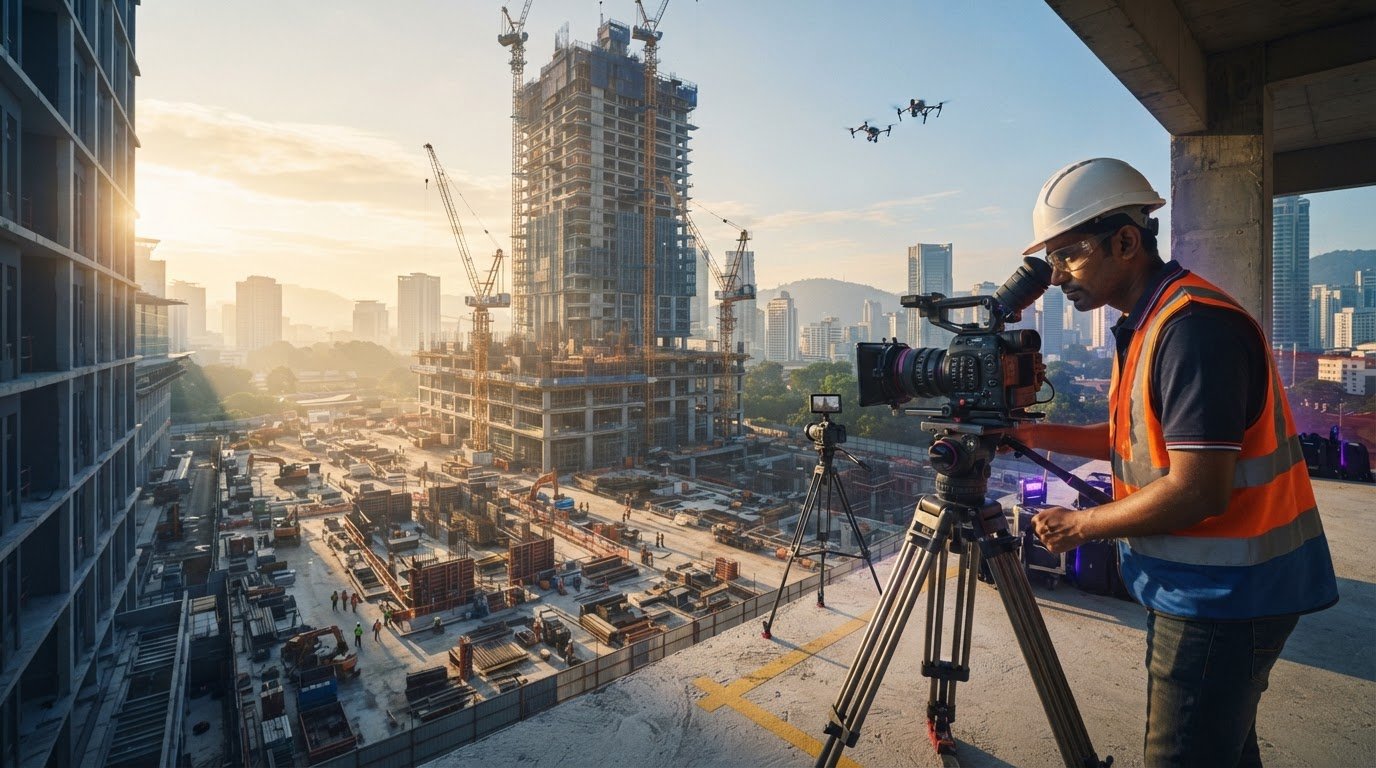
More footage won’t make a construction project easier to understand if every clip shows a different view. To learn how to film construction progress effectively, start with repeatable viewpoints and a clear purpose for each recording. That turns scattered updates into a visual record people can compare and use.
A camera and regular schedule may seem like enough, but active sites bring shifting access, changing work zones and safety requirements. An inconsistent camera position can also make real progress hard to see. The filming plan needs to fit the project, not disrupt it.
This guide explains how to build a practical filming plan from start to completion. You’ll learn how to choose fixed viewpoints, set a cadence that suits the project timeline, and decide when long-term timelapse or drone visuals may help tell the story. It also covers how to organise footage for clearer reporting, project reviews and stakeholder updates. The goal is a consistent record that captures meaningful change, respects site realities and makes each update easier to understand.
• Define who the footage is for before filming so each update has the right level of detail and format.
• Learn how to film construction progress effectively with a repeatable workflow for choosing, testing and maintaining viewpoints.
• Compare long-term timelapse, scheduled ground filming and drone visuals to find the right mix for your project.
• Use milestone reviews, dated files and consistent labels to make footage easier to compare and retrieve.
• Evaluate a production partner on planning, site coordination, continuity and delivery, not camera placement alone.
Construction progress filming is a planned visual record of a project, captured from repeatable viewpoints at agreed stages so changes can be assessed over time. Consistent views make it easier to compare what has changed, what remains underway and how work is moving against project milestones.
Choose the primary use first: internal review, stakeholder updates or a broader project story. The audience affects the framing and level of detail. A project team may need closer views of specific work areas, while senior stakeholders may benefit from wide shots that show the overall site. A public-facing update may need a more carefully edited format.
Agree on the milestones and work areas to include, then identify the intended viewers. Ask what they need to understand from each update. Does the footage need to show a structural change, or whether a work area has moved to its next stage? Clear questions help determine capture frequency and final format, without collecting footage for its own sake.
Translate milestones into changes a camera can show. For example, a milestone might call for a before-and-after view of a work zone, or a consistent wide shot that reveals how the site layout changes. Separate this essential evidence from activity that may look interesting but won’t help viewers assess progress.
Some changes unfold gradually, which may suit time-lapse photography; other milestones may be clearer in scheduled ground footage. The right method depends on what needs to be visible, a choice the next section explores in more detail.
Before confirming a viewpoint, check it with relevant project stakeholders. Verify that filming access is practical, privacy expectations are understood and the proposed approach fits site-safety requirements. Conditions can change as work areas shift, so decide who will flag access changes and how the visual record should adapt without losing useful comparisons.
Once the purpose, audience and observable milestones are clear, each filming decision has a reference point. The result is a record built to answer real project questions, not simply a collection of attractive shots.
A useful filming plan makes each capture comparable and workable around site operations. Keep the camera position, orientation and framing consistent across planned dates. Consistent framing makes visual comparison between project stages clearer.
Use this five-step workflow to turn the project’s goals into a practical routine:
Choose clear sightlines to the work areas and milestones that matter. Avoid positions that obstruct site activity.
Check each location and filming window with the responsible site contact before recording.
Capture a sample view and record the camera’s position, height, direction and composition so the setup can be repeated.
Set a cadence that reflects the pace of work, upcoming milestones and reporting needs. Agree on the project-specific schedule with stakeholders instead of relying on a universal interval.
Check each capture against the planned viewpoints and milestones. Note obstructions or changes that could affect future comparisons.
Prioritise views that show meaningful progress without interfering with site operations. For each position, record practical details such as a reference point, camera height and direction, plus a framing image or written description. If a crane, temporary structure or changing layout blocks the view, document the issue and agree on a response. Don’t quietly move the camera and treat the new angle as directly comparable. Preserve the original view where possible, or label the replacement as a new viewpoint.
Agree on filming windows and access arrangements with the responsible site contact. Follow the project’s requirements for induction, personal protective equipment, exclusion zones and supervision. Before confirming a camera location, ask stakeholders to check mounting, power, connectivity and weather protection needs. These details depend on the site and setup, so verify them rather than assuming one arrangement will suit every project.
Drone visuals may provide a wider view of site activity and complement fixed or scheduled ground filming. Before including them in the plan, confirm that their use is appropriate and that site access, permissions and safety requirements have been checked with relevant stakeholders. Keep ground-level viewpoints in the record so specific work areas can still be compared consistently.
Planning these details takes filming beyond camera placement. If a managed approach would help your team maintain continuity as site conditions change, explore construction progress documentation from VISIOLAB.
Each filming method reveals a different layer of a project. Long-term timelapse shows broad change over time, scheduled ground filming captures selected details and milestones, and drone visuals add an aerial perspective when suitable and permitted. For teams deciding how to film construction progress effectively, the best choice depends on the project brief, site conditions and intended viewers. These methods can work together, but aerial footage doesn’t replace a consistent ground-level record.
| Method | Continuity | Site coverage | Coordination needs | Communication value |
|---|---|---|---|---|
| Long-term timelapse | Frequent views from a fixed position can show change over an extended period. | Limited to the camera’s field of view. | Plan equipment, capture intervals, connectivity and maintenance around site conditions. | Useful for showing broad transformation in a concise sequence. |
| Scheduled ground filming | Repeat visits can document agreed milestones and selected stages. | Can focus on chosen work areas and closer details. | Requires access planning and coordination for filming visits. | Adds human-scale context and detail for reviews or updates. |
| Drone visuals | Provides a series of aerial views when flights can be arranged. | Can show wider site layout and relationships between areas. | Requires stakeholder coordination, suitable conditions, permissions and compliance with site requirements. | Offers a broad overview that may be hard to capture from the ground. |
A fixed viewpoint can make gradual changes across an extended project easier to see, especially when the same area remains in view. But one angle won’t reveal close details, hidden work or activity outside its frame. Equipment, capture intervals, connectivity and maintenance depend on the project setup, so confirm what is practical before committing to a plan.
A considered combination can create a more complete progress story: continuity from a fixed view, detail from planned ground filming and a wider perspective from aerial visuals where conditions allow. Choose the mix that answers the project’s questions clearly.
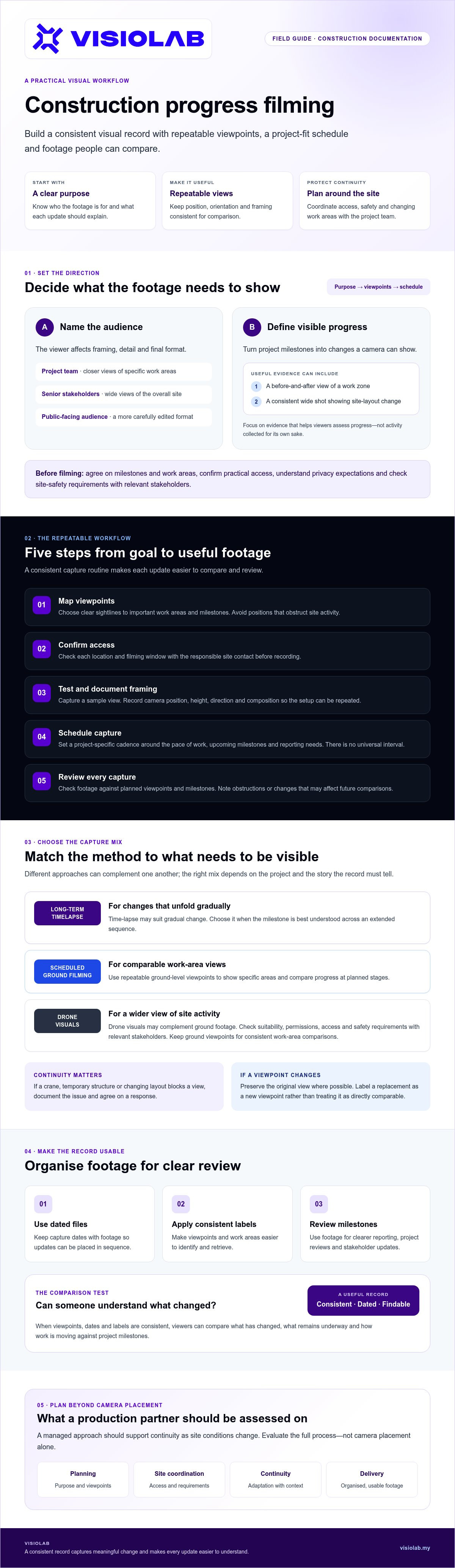
Footage becomes useful documentation when it keeps its context. A short review cycle can confirm whether each capture shows the planned view, relates to a project milestone and is clear enough to interpret. This is a practical part of how to film construction progress effectively: preserve not just the images, but also the information that explains what viewers are seeing.
At agreed checkpoints, review focus, exposure, obstructions, framing and continuity. Compare each capture with the planned viewpoint and note any missing periods or changes in angle. If a view was blocked or a capture was missed, record that gap plainly rather than implying the record is uninterrupted.
Use a simple file structure that makes material easy to trace. For example, group footage by project area or milestone, then apply consistent labels that include the capture date and viewpoint. Confirm with the project team how backups, access permissions, retention periods and ownership will be handled. These arrangements should match the project’s requirements rather than be assumed.
Organise sequences around milestones so viewers can follow what changed and when. Add clear dates and restrained labels, with only enough context to identify the work area or stage. A concise update may suit a regular review, while a chronological project timeline can help stakeholders understand wider progression. Choose the format based on who will use it and what they need to take away.
For broader planning context, see VISIOLAB’s construction progress video documentation guide. If the footage also needs to support wider organisational communication, its strategic corporate video production guide offers a related perspective.
A clear review and delivery process helps teams turn captured footage into a record they can revisit and understand. Learn more about construction progress documentation from VISIOLAB.
A strong production partner does more than capture images. They connect the brief, site coordination, consistent filming and final delivery in one workable process. When comparing providers, look for clear answers about how they’ll keep the record useful when milestones shift or site conditions change.
Use these questions to guide your evaluation and clarify responsibilities before filming begins:
How will you choose viewpoints and match the filming approach to project length, milestones and intended viewers?
Who will coordinate access, safety requirements and filming schedules with the project team?
How will you maintain viewpoints, and what happens if work or access changes make a planned view unavailable?
How will footage be checked, labelled and backed up, and how will gaps or changes be documented?
What will be handed over, who will own the footage, who can access it, and what uses have been approved?
Agree on project-specific deliverables, ownership, approved uses and stakeholder access in writing. That shared understanding helps prevent confusion later, especially when several teams will rely on the footage.
Match the production plan to the project’s duration, work stages, communication needs and site realities. A long-running build may call for long-term timelapse alongside planned filming at selected milestones. A project with important site-wide context may also benefit from drone visuals, provided permissions and site requirements are confirmed. No single setup is right for every project.
A specialist provider can be useful when the work needs continuity across multiple stages and a managed process beyond camera placement. VISIOLAB’s relevant capabilities include construction progress documentation, long-term timelapse and drone visuals. Ask how these could fit your brief, and confirm the proposed schedule, access, technical setup and handover details for your project. For broader provider-evaluation criteria, see this video production agency selection guide.
Knowing how to film construction progress effectively means planning for the full journey, from the first agreed viewpoint to footage stakeholders can use. To discuss your project’s documentation needs, talk with VISIOLAB about construction progress documentation.
A clear goal, repeatable viewpoints and a schedule matched to project milestones turn construction footage into a record people can compare and use. Choose timelapse, scheduled ground filming or drone visuals based on what needs to be seen, then review and organise each capture so its context stays clear.
That’s the foundation of how to film construction progress effectively: plan for continuity from the first view to the final handover. When production needs span multiple stages, a specialist partner can help bring the filming approach and communication goals together.
VISIOLAB, founded in 2016, offers construction progress documentation, long-term timelapse and drone visuals. To discuss an approach for your project, contact VISIOLAB about your construction progress documentation needs.
Film often enough to show meaningful changes and support the project’s reporting needs. Set the cadence around the pace of work, planned milestones and intended viewers, then confirm it with the project team. A stable phase may need fewer updates than a stage with rapid visible change. Whatever schedule you choose, keep capture dates and viewpoints consistent so reviewers can compare footage and understand any gaps.
The equipment depends on the project and filming method. A planned setup may use a camera suited to the required view and a stable mounting position. For long-term capture, equipment also needs to suit the site’s power, connectivity and weather conditions. Scheduled ground filming may need a camera and stabilising support. Confirm access, mounting and safety arrangements with site stakeholders before choosing equipment; there’s no single setup for every site.
Neither method is universally better. Long-term timelapse can show broad change across an extended project from a fixed viewpoint, while scheduled video can capture selected milestones, close details and human-scale context. Timelapse won’t show work outside its frame or hidden activity, so planned filming may add useful detail. Choose based on project duration, visible milestones and reporting needs, or combine methods where the brief and site conditions support it.
Drone visuals can provide a wider view of site layout and how different areas relate, if their use is suitable for the project. They don’t replace repeatable ground-level views, which offer a consistent perspective for comparing specific work areas. Before planning a flight, coordinate with relevant stakeholders—or partner with professional drone operators like Impact Aerial—to confirm permissions, site access and safety requirements. Treat aerial footage as a complementary perspective, not the sole record of progress.
Document each viewpoint so it can be repeated: note the camera position, height, direction and framing, and keep those elements stable across planned captures. Schedule filming against agreed milestones and review each clip for focus, exposure and obstructions. If a camera must move or a capture is missed, log the change rather than presenting the sequence as uninterrupted. Consistency makes comparison more meaningful and gaps easier to interpret.
Use project folders grouped by work area or milestone, with consistent file labels that include capture dates and viewpoints. Review footage against the planned views and milestones, and note missing periods or changes for context. Shape outputs for their viewers: a concise update may suit a regular review, while a dated timeline can show broader project progression. Agree on backups, access permissions, retention and ownership with the project team.
Look for a provider with a clear plan for viewpoint continuity, site coordination, capture schedules, footage review and final handover. Ask how they’ll respond when access or site conditions change, and clarify ownership, approved uses and stakeholder access in writing. VISIOLAB offers construction progress documentation, long-term timelapse and drone visuals. Confirm that any proposed approach fits your project’s milestones, access arrangements and safety requirements before commissioning.
Let’s create and collaborate
We’re versatile multitaskers, and we thrive on a lot of projects. You've seen a few of our works that we are most proud of, and your project could be next in line.

Empowering brands with captivating visual stories, creating strong connections and growth.
