
What if your office doesn’t look “video-worthy”? Professional location scouting for corporate video shoots is about finding what the camera can use, not expecting every room to look polished already. A scout assesses sound, light, layout and background, then decides whether the space can be adapted...
What if your office doesn’t look “video-worthy”? Professional location scouting for corporate video shoots is about finding what the camera can use, not expecting every room to look polished already. A scout assesses sound, light, layout and background, then decides whether the space can be adapted or a different setting would serve the film better.
It’s reasonable to worry about noisy air-conditioning, harsh office lighting or a cramped room on camera. These challenges don’t automatically rule out your workplace. A careful assessment can identify practical ways to shape the image and make the space feel more considered.
This article explains how a professional assesses office sound and filming areas, adapts challenging rooms and uses smartphone photos to review a location before a visit. You’ll also learn what goes into finding and booking a suitable space, so the setting supports the story, schedule and production needs.
• A strong location serves the story and the production’s practical needs, including crew access, schedule and budget.
• Challenging office spaces may still work when lighting, framing and carefully chosen details reshape what appears on camera.
• Smartphone photos can help a scout assess a workplace’s light, layout, backgrounds and potential filming constraints.
• Sound, changing light, power access and nearby activity can all affect whether a location is suitable.
• Finding a space is only part of the process: access, permissions, filming schedules and written agreements also matter.
A location scout finds and assesses settings before filming begins. For corporate video shoots, scouting connects the creative direction with practical production needs.
Matching a location to the creative vision means choosing a setting whose appearance supports the video’s intended tone. This matters because the setting shapes what viewers notice before the script explains the message.
A production team may choose a bright, orderly office for a clear, forward-looking corporate story. A quieter meeting room could better suit a personal interview, while an active workspace may convey collaboration. The scout considers the room’s existing character and assesses whether framing and camera position can bring the desired details forward.
The assessment goes beyond whether a room looks attractive in person. A glass wall may add depth to one shot but reflect activity in another. A long table might suggest leadership, yet dominate a close interview frame. The scout connects each visual choice to the company’s message, audience and intended action.
Connecting a location to the storyline means choosing a place where the script’s events and ideas feel natural. This matters because viewers should understand why each scene takes place there.
For example, a script about workplace safety may call for a relevant working environment rather than an unrelated conference room. An interview about a new initiative may feel more credible beside the people or spaces connected to that change. The scout maps scenes to locations and checks that each setting supports the words and action.
The script also guides what the scout records during a visit. If a speaker needs to walk into a room, the scout considers the route, background and space for camera movement. If a scene depends on a specific object, the scout checks whether it can appear naturally in frame. These details help the production team plan coherent coverage instead of finding solutions during filming.
When one location cannot support every scene, the scout identifies which moments can share a setting and which need a distinct visual context. This can add variety to the finished story without disrupting its flow.
Assessing suitability means checking whether a location can support the planned filming safely and reliably. This matters because office activity, public access and interruptions can affect both the recording and the schedule.
Office risks include background conversations, equipment movement and interruptions to normal work. Public locations can bring traffic noise, passersby or changing access conditions. Advance assessment, agreed access, practical scheduling and a plan to reduce disruption help manage these risks. Before scouting private property, scouts obtain permission from owners and appropriate authorities.
The scout also checks whether the production team can reach the intended camera positions and place equipment without blocking essential movement. A room that suits the storyline may still be impractical if people cannot work around the setup. The scout records constraints and discusses whether a different time, filming area or location better suits the production.
Location scouting for corporate video shoots brings creative and practical decisions together. The scout works with directors, producers and location managers to assess possible settings, document useful details and identify permission needs. The resulting choice reflects the script, visual intent and conditions the crew will face while filming.
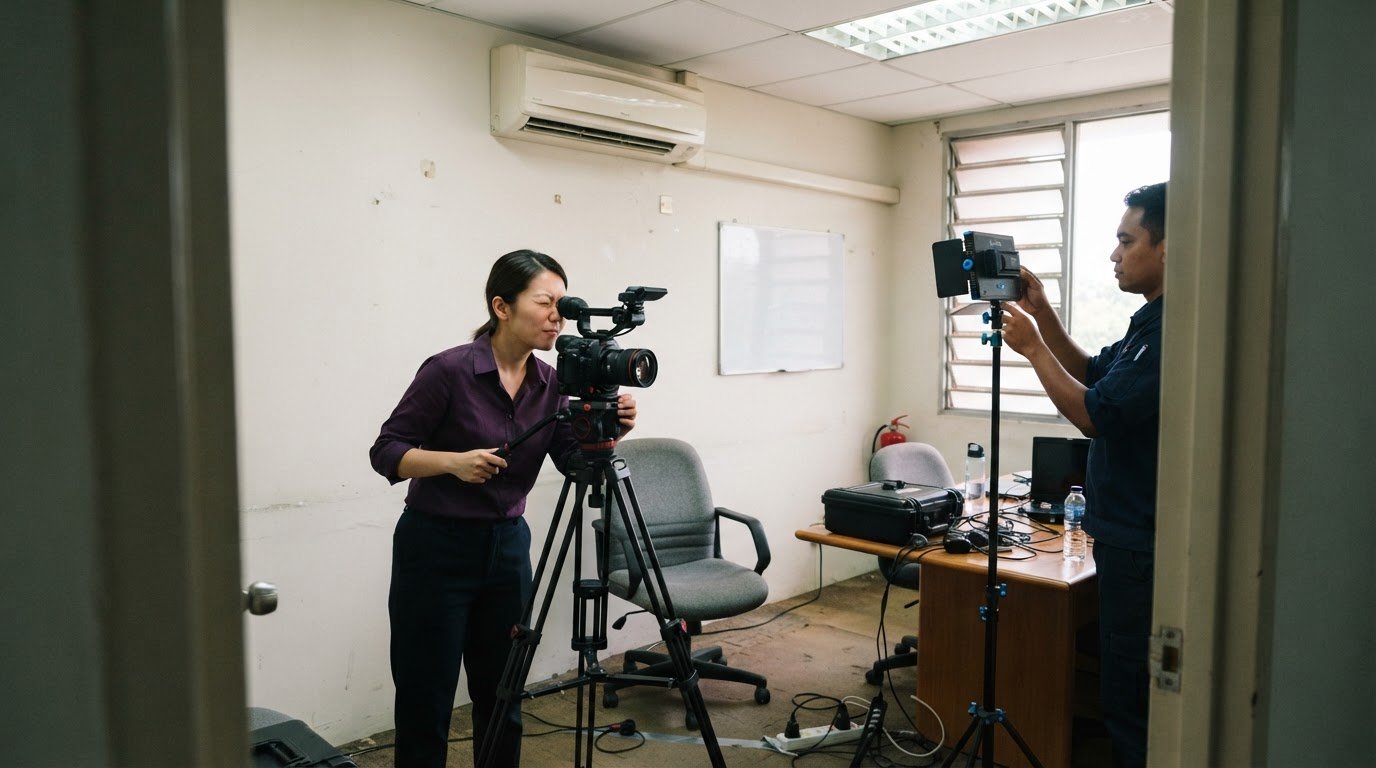
A room that looks plain, crowded or poorly lit can still work for a strong corporate film. A professional scout identifies the specific problem, then works with the production team to reshape the space, adjust the filming plan or consider another location. The aim is to make the setting serve the message, not disguise the room’s limits.
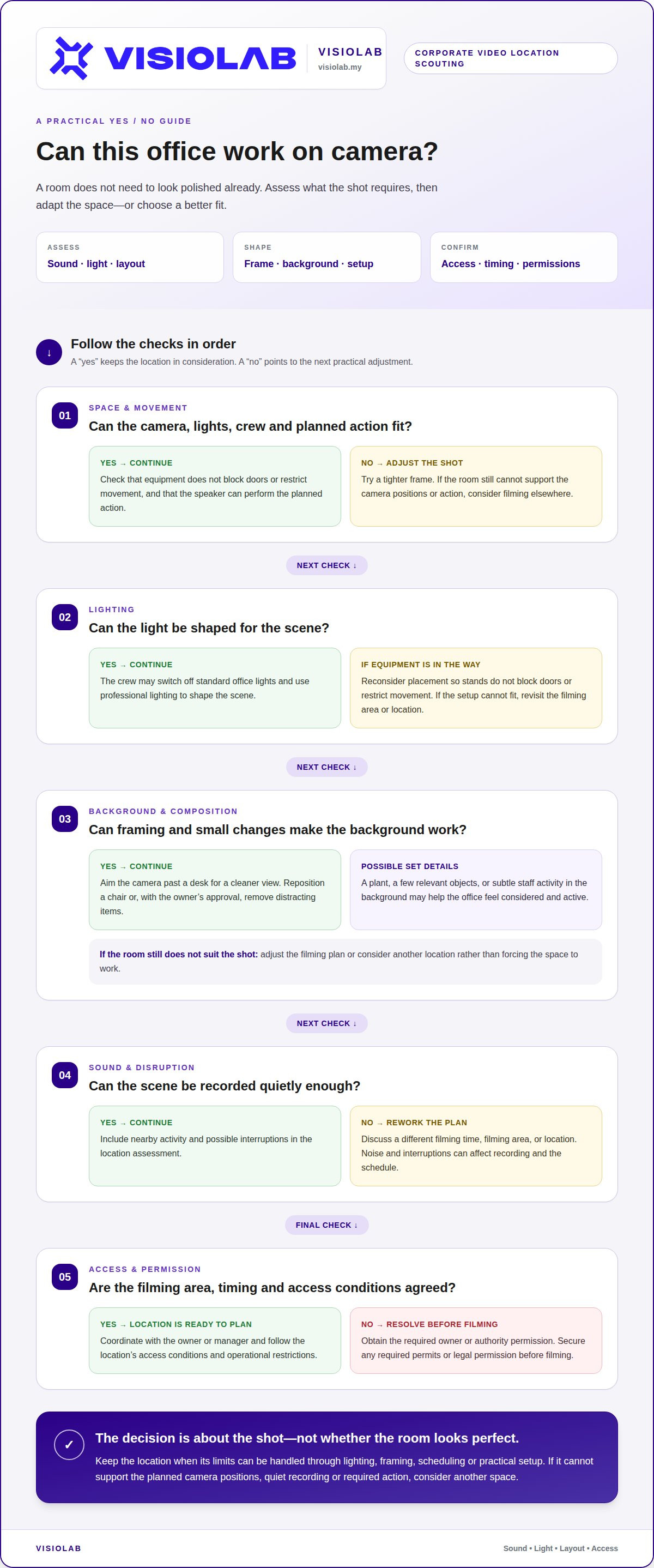
Lighting is often the first adjustment. Standard office lights can create flat images or awkward colour, so the crew may switch them off and use professional lighting to shape the scene. In a small meeting room, careful placement can illuminate the speaker while keeping distracting corners subdued. The scout checks that stands and equipment fit without blocking doors or restricting movement.
Composition can also change how a room feels on screen. A camera aimed past a desk may capture a clean background, even if the wider office looks busy. The crew might reposition a chair, remove distracting items with the owner’s approval, or add a plant and a few relevant objects. Subtle movement, such as staff working in the background, can make an office feel active rather than staged.
Space constraints need practical solutions, not wishful thinking. A scout assesses where the camera, lights and crew can stand, and whether the speaker can move through the planned action. If a narrow room cannot accommodate a wide shot, the team may choose a tighter frame or film elsewhere. The building manager can help coordinate room access and reduce disruption to nearby work.
Rules vary by setting, so the professional coordinates with the relevant owner or manager and follows the location’s access conditions. For offices, hotels and studios, this means agreeing on filming areas, timing and operational restrictions. Public locations may also require permission from property owners or appropriate authorities. Where permits or legal permission are required, the crew secures them before filming.
Adapting a space doesn’t mean forcing every room to work. If a location cannot support the planned camera positions, quiet recording or required action, the scout explains the trade-offs and considers another space. A simple interview may suit a compact office, while a demonstration involving staff movement may need a more open layout. This distinction helps protect the story and shoot schedule.
For a corporate video, the scout weighs what can be improved against what the message needs. Sometimes a few lighting and set adjustments are enough; sometimes changing rooms is the clearer choice. This practical approach helps turn a challenging workplace into a considered filming environment, with the corporate video production process shaped around the story and the space.
Smartphone photos give a professional scout an early view of a workplace before an in-person visit. Images of the room, windows, entrances and nearby surroundings help assess natural light, layout, backgrounds and possible filming constraints. They provide an initial view, not a guarantee that the location is ideal.
A scout considers how each photo might translate to the screen. A window behind an interview subject could create a bright background, while one beside them may provide a more balanced source of daylight. A wide image can reveal furniture and walkways, but a close view of the intended background may show distracting signs, reflections or visual clutter.
Photos also help the scout assess camera positions. Lens choice, camera height and framing change how viewers experience a space. A low viewpoint may make a small office feel more imposing; a wider frame may show context but include more distractions. The scout compares possible angles with the planned scene, then identifies what needs an in-person assessment.
Useful photo coverage includes:
• The full room from opposing corners, showing doors, windows and furniture.
• The intended interview background, captured from the likely camera position.
• Access routes, lifts or stairs, and any narrow passages relevant to equipment movement.
• Potential holding or staging areas, nearby parking and signs showing parking restrictions.
• Power outlets and the surrounding space where equipment might be placed.
Seeing an outlet in a photo doesn’t establish whether the available power suits the production. The scout considers the planned equipment, existing electrical load and access to the breaker box. Photos can help identify questions for a site visit, but they cannot show every connection or reveal how other equipment uses the same supply.
Lighting conditions need context, too. A photo taken in the morning may look different from one of the same room later in the day. The scout considers window direction, visible shadows and the planned filming time, then decides whether another visit is needed to understand changing light. Images of the surrounding area can also reveal nearby activity that may affect the shoot.
For a clearer assessment, the location owner or workplace contact can share several angles and explain how the room is used. The scout can then compare the photos with the script, camera positions and production needs. This review narrows the options, highlights practical constraints early and helps determine whether the setting merits a full site visit before booking.
A professional scout turns the creative vision into a shortlist of workable locations, then coordinates access and booking. Each option is assessed against the filming plan, crew needs and venue conditions.
Comparing locations means weighing practical access and production demands alongside visual appeal. This matters because a striking setting can be difficult to use if the crew, camera and equipment cannot reach the planned filming area.
The scout compares loading access, parking availability and the route from parking to the set. They assess whether equipment can pass through lifts, corridors and doorways, and whether filming will disrupt normal operations. Travel between locations and the production’s requirements also shape the logistics. Scouting and location costs depend on the number of sites, access terms and time involved, with costs determined case by case after a quote request.
This stage identifies permissions and location expenses that affect filming in Malaysia. This matters because ownership, public access and filming conditions vary by site.
For a public location, the scout identifies the owner or appropriate authority controlling access and arranges permits or legal permission where required. Requirements depend on the site, so the scout coordinates them rather than assuming one permission covers every location. Private venues also require the owner’s agreement and clear access terms. Scouting costs reflect the scope of work, including site distances, assessment time and access arrangements.
The scout plans scouting and booking around the shoot date, location availability and the time needed to secure access. Starting early gives the production team room to compare options and resolve scheduling or permission constraints.
A single office interview may need less coordination than filming across several sites or arranging public access. Venue schedules, owner approval and possible disruptions also affect timing. The scout confirms when the location can accommodate filming, then books once its terms and conditions suit the production schedule. The necessary lead time depends on those arrangements and the shoot’s complexity.
Before booking, the scout confirms filming conditions and records the agreed terms. Clear arrangements help the crew plan camera setup and avoid preventable disruptions.
The scout confirms the filming schedule, available areas, access arrangements and whether normal venue activity could interrupt filming. They clarify parking, equipment routes, staging space, power access and restrictions on moving furniture or adding production elements. They also establish who can approve decisions and how potential disruptions will be handled, then ensure the agreement covers access and filming dates.
Corporate filming locations in Malaysia can include office buildings, hotels, studios, convention venues and suitable public spaces. The scout chooses among them based on the script, access and each location’s ability to support the planned action.
A suitable location supports both the story and the practical demands of filming. A scout weighs visual character, light, sound, access, power, schedule and budget together. A polished room may still fall short if traffic noise disrupts interviews, while a modest office may work well with the right filming plan.
Light should suit the planned camera positions throughout the shoot. The scout considers how daylight changes at the planned time, then tests the image with a short recording. Artificial lighting can supplement natural light, while a shaded outdoor area or overcast day may provide more consistent conditions. Visiting at the planned filming time reveals details that a visit at another time might miss.
Sound deserves its own assessment. The scout listens through headphones for air-conditioning, nearby traffic, wildlife or noise from neighbouring properties. Wireless microphones are tested on location for interference. An urban centre may bring traffic and pedestrians; a park may mean changing weather and longer equipment routes. Each condition affects how the crew can capture clear dialogue and keep to the schedule.
Power and access also shape the production plan. The scout considers the equipment’s electrical load and access to the breaker box, not just whether outlets are visible. Crew, cast and equipment need workable routes, with suitable parking close enough to support movement. Mobile reception and nearby food stops can also influence logistics during a longer filming day.
For outdoor locations, the scout checks the forecast and the setting’s exposure to sun, wind, rain, heat or cold. A beach can bring wind noise, salt air, sand and direct sun, affecting both recording and equipment handling. In a natural area, difficult transport routes can also limit practical camera positions.
The scout records observations against the production schedule and requirements:
• Ambient sound, including traffic or neighbouring activity.
• Light quality and how it changes at the intended filming time.
• Equipment access, parking, power and mobile reception.
• Weather exposure and practical limits on crew movement.
• Owner cooperation and any access conditions affecting filming.
Finally, the scout compares these findings with the production’s budget, schedule and crew requirements. Spacious interiors, open layouts and removable furniture can support different scenes. A location is a strong fit when its visual qualities and logistics work together, and the owner and relevant parties can support the filming plan.
For a corporate video, the best choice is the space that supports the message without creating avoidable production obstacles. Plan your corporate video shoot around a location that fits both the story and the filming conditions.
A location’s visual appeal must also justify its financial cost. Permission and cooperation may be needed from the owner, neighbours, local government and law enforcement. Scouting records can note ambient sound conditions. Crews should scout on the same day of the week and at the same time planned for filming, since conditions can change, and record a few seconds of test footage to check light levels.
VISIOLAB helps organisations turn complex messages into clear, purposeful corporate video content. When your story needs more than a suitable room, production can bring the location, visuals and script together in one coherent film.
Whether you’re communicating a company’s direction, explaining a process or sharing an ESG story, the setting should support the message rather than compete with it. VISIOLAB also produces Explainer and Training Video and Safety Video content, where a considered filming environment can help audiences focus on the information and action.
Bring your video objective, key message and potential filming locations into the conversation. These details help shape a production approach around what your story needs and how the space can serve it.
Contact VISIOLAB to discuss your corporate video.
A location should do more than look good on camera. It should help your audience understand the message and see why it matters. As you move from planning to production, keep the intended viewer and the response you want in focus. Those choices give the creative team a stronger foundation for shaping the story and selecting a setting that supports it.
Professional location scouting for corporate video shoots connects that intent with the practical demands of filming. The next step is to bring your video objective, core message and possible filming spaces into a production conversation. A focused brief helps align the location with the story, rather than letting the location dictate it.
VISIOLAB creates corporate, Explainer and Training, and ESG videos shaped around organisational messages. If you’re ready to develop your project, contact VISIOLAB about your video shoot. Start with the message you want people to remember, then build a setting and film that bring it into focus.
It may still work if the scene can be framed around the office’s strongest features. A scout can look for a useful detail, such as a company sign, product display or distinctive meeting-room backdrop, then assess how that feature supports the message. The key question is whether the space helps viewers understand the story. If not, another room or location may provide clearer visual context.
A professional scout assesses potential settings against the production’s creative and practical needs, then documents details that help the team plan filming. The location file may include room dimensions, a floor plan or hand sketch, and map notes such as coordinates and compass directions. It can also record access arrangements and location conditions, giving the production team a reference for planning camera positions, crew movement and the shoot schedule.
Let’s create and collaborate
We’re versatile multitaskers, and we thrive on a lot of projects. You've seen a few of our works that we are most proud of, and your project could be next in line.

Empowering brands with captivating visual stories, creating strong connections and growth.
