
The best video distribution strategy for corporate content is planned before production, not after the final edit. Choose platforms based on where your audience spends time, what they need to learn and how they will use the video. One version rarely fits every channel. It’s tempting to finish a vid...

The best video distribution strategy for corporate content is planned before production, not after the final edit. Choose platforms based on where your audience spends time, what they need to learn and how they will use the video. One version rarely fits every channel.
It’s tempting to finish a video first and decide where to post it later. But platform, format and audience shape production choices, from the story and length to captions and cut-downs. Planning distribution early gives each asset a clear role, whether it needs to build awareness, explain a complex topic or support a business decision.
This guide explains how to match corporate videos to platforms, measure engagement alongside business outcomes, and balance broad reach with brand control. You’ll also learn how to plan distribution before filming, so the content is built for the audiences and channels that matter across Malaysia.
• Choose platforms around audience habits and content purpose, then adapt each video’s format to its destination.
• Look beyond views: use watch time, retention, engagement and conversions to understand whether content is moving audiences toward business goals.
• Balance third-party reach with channels you control, so visibility grows without losing the brand experience.
• Decide where and how a video will be distributed before production to shape its story, format and reuse potential.
• Build a repeatable workflow for publishing, promoting and reviewing videos, then refine it using performance data.
No single platform suits every corporate video. The right choice depends on your audience, business goal and viewing context. Start by identifying who needs the message and what they should do after watching. A video distribution strategy for corporate content should match each channel to its audience, rather than treating all platforms as interchangeable.
Research audience preferences before choosing formats. Review questions from sales conversations, customer feedback and existing channel analytics. Note whether viewers want quick updates, practical instruction or detailed explanations. For example, a procurement audience researching suppliers may value professional insights on LinkedIn, while a customer-facing campaign may use Instagram or TikTok for short, visual stories.
Then match the platform to the viewing experience. YouTube can support educational videos and in-depth tutorials, while Instagram Reels and Stories suit brief, vertical clips. LinkedIn works well for professional insights and industry trends, and captions help viewers follow along without sound. Facebook can encourage comments and shares when a post gives viewers a clear reason to respond. Choose channels your intended audience uses, not simply those with the broadest potential reach.
Format matters as much as platform. A 90-second brand video may fit a company website or YouTube, where viewers can spend more time with the story. A 15-second teaser may work better as an Instagram Reel or Story, directing viewers toward the full video. One production can support several edits, but each version should make sense on its own. Adjust the opening, captions, aspect ratio and call to action for each destination.
Use audience research to set distribution priorities. B2B teams may focus on LinkedIn and a searchable YouTube library; consumer campaigns may add Facebook, Instagram or TikTok. A multi-platform plan can serve different audience segments, provided each channel has a clear role. Set the publishing time around observed audience activity, then compare results across channels. Avoid posting identical edits everywhere without adapting their format or purpose.
For Malaysian corporate video marketing, consider advertising rules and personal-data obligations when identifiable people or customer information appear. Obtain appropriate permissions for footage and handle personal data responsibly. Requirements depend on the content and how the information is used.
In Malaysia, paid promotion costs depend on the platform, audience targeting, campaign duration and creative adaptations. Set the budget according to the campaign objective and the audience you need to reach.
Before production, write down the audience, intended action, primary platform and supporting channels. This simple brief helps shape the script and edits around real viewing habits, instead of forcing one finished video into every feed.
Start measuring by stating the campaign’s purpose and the action viewers should take. A safety video might support training completion, while a product explainer could encourage enquiries. These goals call for different key performance indicators (KPIs). Views can show exposure, but they don’t prove viewers understood the message or acted on it.
Choose a focused set of metrics that connects viewing behaviour to the intended outcome. For a YouTube training video, watch time and audience retention can show whether viewers stay with the instruction. Click-through rate can reveal whether a call to action prompts the next step. Conversion rate can connect video traffic with a measurable business result, such as a submitted enquiry.
Engagement metrics explain how audiences respond during viewing. Track watch time, retention, comments, shares and engagement rate across each platform. A view-through rate can indicate whether viewers stay: the research definition counts viewers who watch at least 30 seconds or complete the video. Apply platform definitions consistently, since a “view” can represent different viewing behaviour across channels.
Compare views and reach with the campaign’s intended audience.
Review watch time, retention and view-through rate.
Track comments, shares, clicks and engagement rate.
Measure conversions or enquiries linked to the campaign.
Read metrics together, not in isolation. If a YouTube video earns views but loses viewers early, its opening or pacing may need refinement. If viewers watch but don’t click, make the next action clearer or more relevant. Compare results with the campaign purpose before deciding what to change.
Track each channel separately, then compare patterns across platforms. Analytics can reveal whether viewers who watch social clips later visit a website or engage with longer content. Email campaign opens and clicks can show whether a video thumbnail or preview encouraged recipients to act. Use consistent campaign names and tagged links so reports connect activity to its source.
Testing should isolate one change. For example, compare two thumbnail treatments while keeping the video and audience consistent. Review the same KPIs over a comparable campaign period. Avoid changing the thumbnail, audience and call to action at once; otherwise, the results won’t show which adjustment mattered. Use the data to refine the next campaign, rather than treating one strong metric as proof of overall success.
A clear measurement plan can also shape corporate video content around its intended action. Define the outcome first, select metrics that reflect it, and use each campaign’s results to guide the next decision.
Third-party platforms can expand reach, while a company portal gives the brand more control over presentation. Treat them as complementary channels, not competing choices. For example, a LinkedIn post can introduce a corporate film, while an embedded version on the company website provides a focused viewing experience. The right balance depends on whether the campaign prioritises awareness, qualified attention or a clear next step.
Reach alone doesn’t show whether a video reached the people who matter. A specialist B2B video watched by 500 relevant prospects may be more valuable than a generic video viewed by 50,000 people unlikely to become customers. Use audience targeting to focus paid distribution on relevant roles, industries or customer groups. Then assess whether views lead to meaningful clicks, enquiries or conversion activity.
Give each channel a defined role. LinkedIn can carry professional insights, while a company portal can host a detailed film alongside related information. Paid promotion on Facebook, Instagram, YouTube and LinkedIn can help campaigns reach targeted audiences beyond existing followers. Organic posts can engage people who already follow the brand. Combine channels when each adds a distinct route to the same business objective.
Brand control involves more than choosing where a video appears. Set clear rules for logos, approved wording, captions, calls to action and the pages linked from each post. Strategic brand consultancies like Mahardhika often advise organisations that keeping the core message consistent across touchpoints is essential for building long-term authority, even as you tailor the opening and supporting copy to each platform. For example, a LinkedIn edit can foreground an industry insight, while a website version gives viewers fuller context.
Distribution carries risks, too. Copyright issues can arise when footage, music, images or other material is used without appropriate rights. Brand reputation can suffer if a video is misleading, insensitive, inaccurate or shared without suitable context. Before release, review permissions, factual claims, captions, logos and the destination page. Confirm that each version fits the audience and brand standards.
Use a simple channel plan to make trade-offs visible. For each platform, record its audience, purpose, level of control and success measure. This makes it easier to see where broad awareness supports the brand and where a more focused experience can encourage action.
Extend discovery and targeted reach.
Shape the surrounding brand experience.
Compare relevant clicks and conversion activity, not reach alone.
Review the mix after each campaign. If broad distribution attracts attention but few qualified actions, adjust targeting or strengthen the route to the next step. If the company portal holds attention but attracts limited traffic, use selected external channels to guide relevant viewers there. Balance is deliberate: reach supports discovery, control sustains context, and brand fit connects both to the campaign’s purpose.
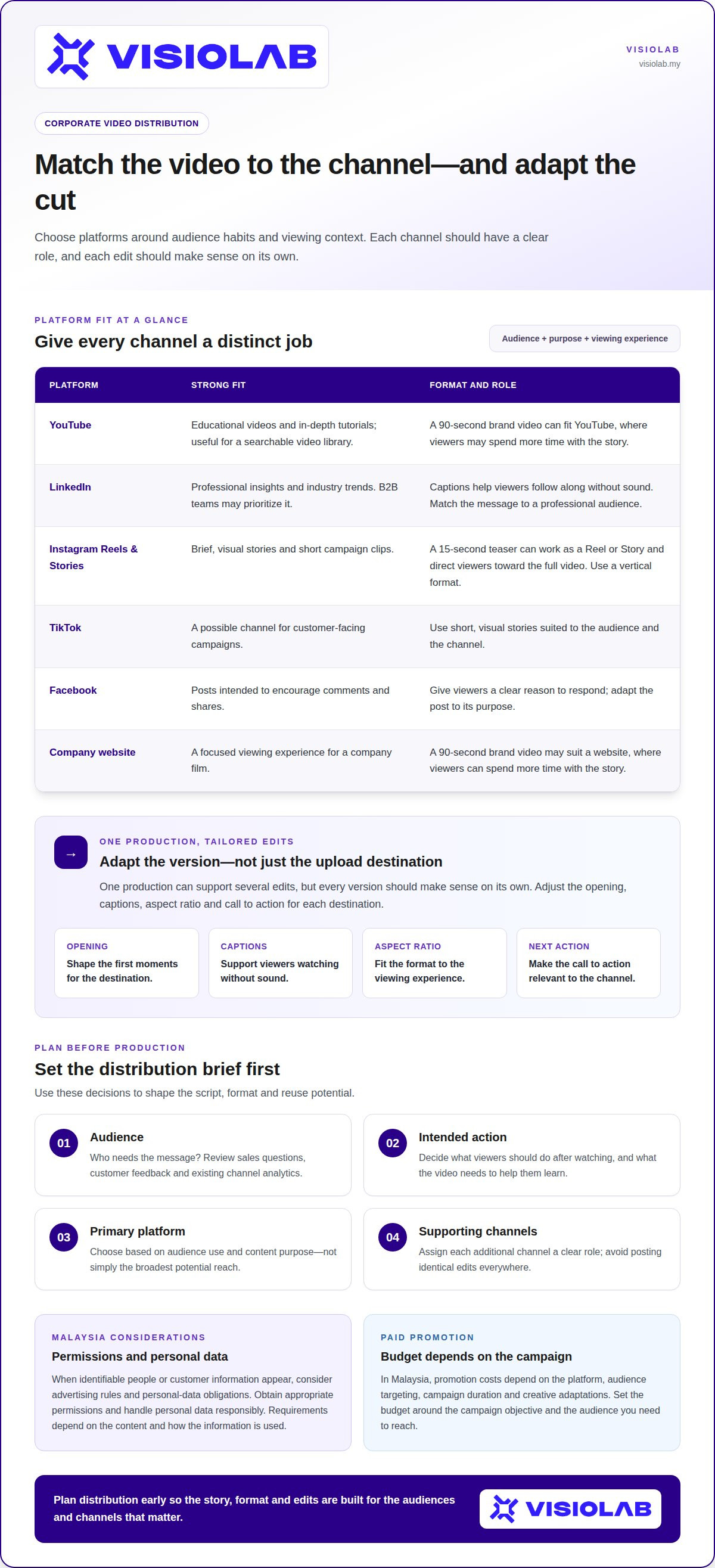
Distribution decisions shape production choices, so settle the intended channels before scripting. For a corporate video, define the audience, the message they need and the action they should take. Then choose the primary destination, such as a company website, YouTube or LinkedIn. This gives the creative team a clear structure, rather than leaving a finished edit to be reshaped for every platform.
Build a distribution brief around each format. Record the channel, aspect ratio, expected viewing context, caption needs and call to action. A LinkedIn version may need informative captions for silent viewing, while a vertical Instagram cut may need a faster opening. These decisions influence framing, graphics and script length. They also show which production elements need to be captured for each destination.
Plan the main film and its shorter edits together. A 10-minute interview, for example, can provide several sections for reuse; strong moments can become 20–60-second clips. The interview structure should include clear topics and complete answers, making each excerpt understandable on its own. If YouTube is a destination, plan chapters for any video longer than eight minutes, so viewers can find relevant sections.
Choose a direct path from each version to its next step. A short social clip might point to a longer video or relevant landing page. A LinkedIn edit could lead viewers to an industry resource or enquiry form. Decide which page, button or link supports the campaign before filming. This keeps the spoken call to action, on-screen text and destination aligned; for teams steering viewers into automated service channels, solutions like interaflow.ai can help manage and respond to incoming inquiries seamlessly.
Include measurement in production planning. Define the purpose of each version and connect it to the analytics available on its platform. For example, assess a website version through viewing behaviour and visits to the linked page, while tracking a LinkedIn post for clicks and engagement. Set a consistent naming system for campaign assets so reports distinguish versions and channels.
Use past analytics to guide release timing and creative choices. If LinkedIn activity rises during particular work periods, schedule the video around those patterns. Treat the findings as a starting point, then compare each release. A consistent schedule helps teams coordinate publication, but avoid posting so often that viewers lose interest. Plan enough supporting content to sustain the campaign without exhausting the core message.
Before filming, confirm the planned deliverables in a simple production map:
The complete story and primary destination.
Edits shaped for each selected channel.
Captions, thumbnails, post copy and destination links.
Analytics and actions connected to each version.
This structure makes production intentional. The script, framing and edit each serve a distribution purpose, and every version has a clear destination.
Begin with a written campaign brief. State the audience, business objective, key message and action viewers should take. Assign each channel a purpose, such as search discovery on YouTube or professional reach on LinkedIn. Name an owner for publishing and reporting. This connects production, promotion and measurement, rather than treating distribution as a final upload task.
Next, build a content sequence around audience questions. A suggested YouTube rollout defines channel positioning in Month 1, then builds an initial search library of 12 to 15 videos during Months 1-3. Choose topics sales teams hear repeatedly, and use relevant keywords, tags and compelling thumbnails. These details help viewers understand what each video covers and make the library easier to discover.
From Months 3-6, add discovery content that introduces the longer videos to new audiences. During Months 4-6, extract three to five Shorts from each long-form video. Give each short clip one clear idea and a route to the fuller resource. Adapt the opening and caption to its destination, rather than posting identical edits across every channel.
Set a release schedule using audience activity and past channel performance. Publish when the intended viewers are active, then maintain a pace they can follow. Consistency matters, but an overly dense schedule can create content fatigue. A few weeks after the full video launches, share a key insight as a fresh entry point. Organic posts can engage existing followers, while paid promotion can extend reach to targeted audiences.
From Month 6 onwards, audit the channel and adjust its direction. Identify which topics attract relevant viewers, where attention drops, and which videos drive useful actions. Retire formats that no longer serve the objective, refresh strong material, and update the next publishing plan. A regular review turns distribution into an ongoing cycle: publish, learn, refine, then publish with sharper intent.
Use this workflow to turn scattered uploads into a purposeful release plan. Plan your corporate video distribution around the audiences, channels and outcomes your content needs to serve.
VISIOLAB helps organisations across Malaysia turn complex messages into clear, purposeful video content. Bring the team in when you need production planning to align with your audience, platform and business goal from the outset.
For a central brand story, Corporate Video can shape the message for its intended channels. Explainer and Training Video can make processes or detailed information easier to follow. ESG Video and Safety Video can communicate focused topics to employees, stakeholders or customers. Each project starts with the message and the viewers it needs to reach, then builds content around that purpose.
If you’re ready to turn your distribution plan into a video, contact VISIOLAB to discuss your project.
Your next corporate video can do more than deliver a message. It can create a connected experience, with each edit, channel and next step designed around the people you need to reach. A clear video distribution strategy for corporate content turns that intention into a practical brief before production begins.
VISIOLAB creates Corporate Video, Explainer and Training Video, and ESG Video for organisations that need to communicate clearly. Bring a specific objective, audience and distribution plan to the conversation, so production can start with a sharper direction. The aim isn’t to be everywhere at once. It’s to make every version serve a purpose.
Choose the message you want audiences to carry forward, then give it a strong path to travel. Start planning your video strategy with VISIOLAB, and take the next step with confidence.
A video distribution strategy sets out how a video reaches its intended viewers and supports a business goal. It covers channel roles, release timing, adapted versions and the next action for viewers. For example, a company can use a product demonstration in a sales follow-up, then share selected excerpts through social channels. This turns one production into a planned sequence rather than a one-time post.
Promote a business video according to its campaign purpose, audience response and useful lifespan. A product launch may call for concentrated promotion around the launch period; an evergreen training video can be shared when employees need it. Reintroduce a useful insight through another channel when it adds context, not simply to repeat the same post. Review engagement and audience response to guide the next promotion.
The best platform is the one that reaches the intended audience in a setting suited to the message. YouTube can make tutorials and explainers easier to find over time, while LinkedIn suits professional perspectives. For a campaign intended to spark customer conversation, Facebook may be useful. Match the platform to viewer intent, then connect the video to a relevant next step, such as a product page or enquiry route.
A corporate video distribution strategy plans how an organisation publishes and reuses video across its communication channels. It connects each asset to a defined audience, business purpose and release plan. For example, a company introducing a new internal process might share a full explanation with staff, then give managers a concise version for team briefings. The strategy coordinates these uses so the message stays clear across audiences.
For organisations in Malaysia, choose platforms based on audience behaviour and communication goals, rather than assuming one channel fits every sector. YouTube can host detailed corporate explainers, LinkedIn can support professional communication, and Facebook or Instagram can distribute audience-friendly campaign edits. A company serving several audience groups may use multiple platforms, each with a distinct role and a consistent core message.
Choose YouTube for searchable, in-depth viewing; LinkedIn for professional insights; TikTok for quick, trend-aware storytelling; and Facebook for posts designed to prompt comments or shares. Then consider why the audience is watching and what action each platform can support. A technical explainer might lead with YouTube, while a short introduction could direct viewers to the complete resource on another channel.
Use the format and duration that suit each platform: short-form social videos can run 10–30 seconds, while YouTube videos between 7 and 15 minutes can suit deeper topics. Suggested platform-specific ranges include 21–34 seconds for TikTok and 7–15 seconds for Instagram Reels. Set posting frequency using audience activity and performance data; keep a sustainable cadence that leaves each video room to reach viewers.
Measure performance by linking viewing behaviour to the intended business result. Track watch time and retention for attention, click-throughs for audience action, and conversions or enquiries for business outcomes. Use tagged campaign links or consistent campaign names to identify which channel brought viewers to a relevant page. Compare results with campaign spend and objectives, and report the assumptions used to attribute outcomes to video activity.
Let’s create and collaborate
We’re versatile multitaskers, and we thrive on a lot of projects. You've seen a few of our works that we are most proud of, and your project could be next in line.

Empowering brands with captivating visual stories, creating strong connections and growth.
