
GLC video procurement often involves structured approvals, transparent sourcing, audit trails and, in some cases, Bumiputera vendor participation reporting. Video production for government-linked companies (GLCs) therefore starts with a clearly defined scope, deliverables and schedule, so the creati...
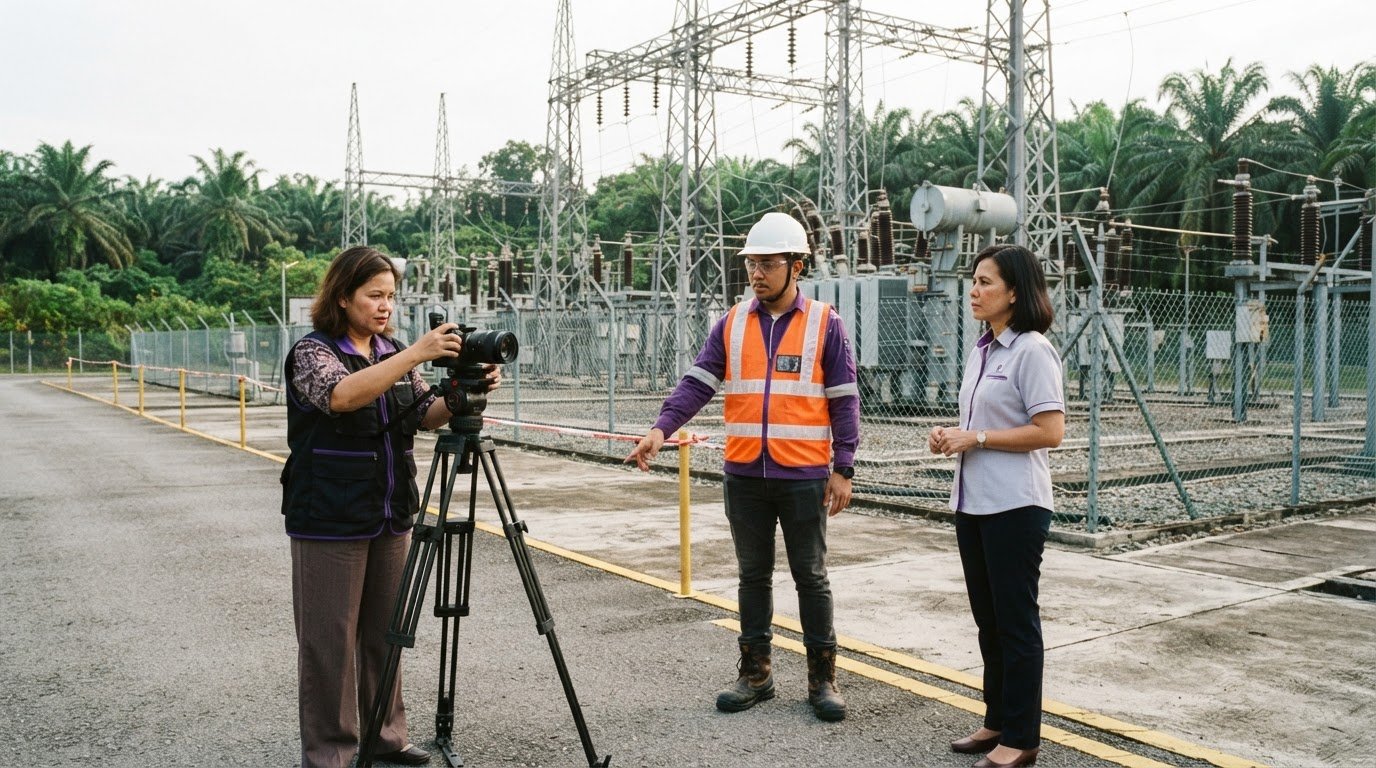
GLC video procurement often involves structured approvals, transparent sourcing, audit trails and, in some cases, Bumiputera vendor participation reporting. Video production for government-linked companies (GLCs) therefore starts with a clearly defined scope, deliverables and schedule, so the creative plan can align with procurement requirements.
Several teams may need to review both the brief and the finished film. To keep the process on track, define the purpose, audience, approval roles and delivery formats before filming, then include review time in the schedule.
This guide covers what to include in a proposal, what to settle before the shoot and how to plan post-production. It also explains how corporate films can help GLCs and statutory bodies communicate complex organisational messages clearly.
• Build procurement requirements into the production plan, including approval stages, transparent sourcing and audit-ready documentation.
• Set the film’s purpose, audience, key messages, deliverables and review process before filming to keep production focused.
• Allow five to ten working days for a corporate event highlight reel, depending on its complexity.
• For a November or December event, begin planning well ahead and leave extra time for Q4 scheduling pressures.
• Plan for privacy and permissions: identifiable footage is personal data under Malaysia’s Personal Data Protection Act 2010, as amended in 2024.
A corporate film is a planned video that explains an organisation’s purpose, work or priorities to a defined audience. For a Malaysian government-linked company (GLC), it can connect business activity with public responsibilities, showing how strategy translates into outcomes. A statutory body is a public entity established to carry out a defined public function. Its film may clarify its mandate, services and contribution for staff, stakeholders or the public. Effective video production for government-linked companies (GLCs) begins by making that role clear.
Malaysia’s GLCs account for 42% of the stock exchange’s total market capitalisation. That scale makes accuracy and context essential: a film about infrastructure, finance or public services should explain the organisation’s role without blurring it with government policy. Malaysia established the GLC Transformation Programme in 2004 to turn selected GLCs into high-performance companies. Twenty entities graduated from the programme, giving filmmakers a concrete example of how institutional priorities and performance narratives can evolve.
Common risks include slow or conflicting approvals, unclear ownership of key messages and accidental disclosure of confidential information. GLC suppliers may also need to meet requirements such as Ministry of Finance registration and support audit or participation reporting. Reduce these risks with a documented approval path, a clearly scoped brief and careful handling of sensitive material.
Define the film’s central purpose in one sentence. A transport organisation, for example, might explain a major service improvement, while a statutory body could introduce its public-facing role. Then identify the intended audience and the understanding or action the film should support. These choices guide the script, interview selection, locations and final formats. They also give reviewers a shared objective for assessing the film.
Shape the organisation’s structure into a clear narrative. A film featuring several departments can show each one’s contribution while keeping a single central message. Separate confirmed facts from proposed language, and assign a subject-matter reviewer to check technical claims. For an infrastructure programme, the story might connect planning, delivery and community impact without making unsupported promises.
Before production, establish who approves the script, interview questions, rough cut and final master. Record each reviewer’s role and feedback channel in the project plan. Consolidated comments at each review stage help prevent contradictory edits from reaching the editing team. For video production for government-linked companies (GLCs), use consistent version names and approval records, particularly when procurement or audit documentation is part of the project file.
State the purpose, audience, key messages and intended use.
Identify the documents and people supporting factual claims.
Name reviewers and define review stages before filming.
List locations, interviewees and any sensitive topics requiring control.
A strong corporate film combines institutional precision with a human perspective. For Malaysian GLCs and statutory bodies, that means a clear story, traceable claims and a review process involving the right decision-makers. Define these elements before filming to communicate complex work with greater clarity.
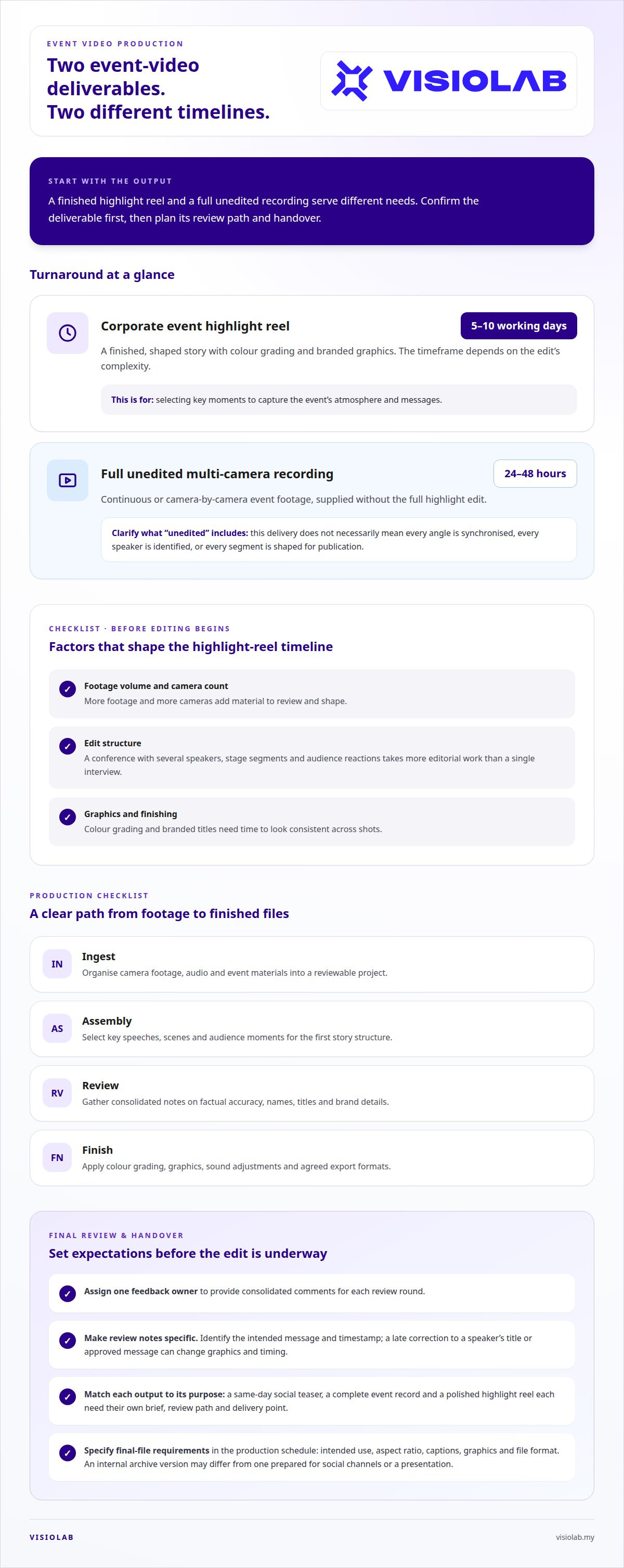
Post-production turnaround is the time between filming and delivery of the edited video. For a full corporate event highlight reel with colour grading and branded graphics, the typical timeframe is five to ten working days, depending on complexity. A full unedited multi-camera event recording may be available within 24 to 48 hours after the event. These are different deliverables: one is a finished, shaped story; the other is captured footage without a full edit.
A highlight reel is a concise edit that selects key moments to capture an event’s atmosphere and messages. Turnaround depends on footage volume, the number of cameras, the edit structure and the complexity of the graphics. A conference with several speakers, stage segments and audience reactions requires more editorial work than a single interview. Colour grading and branded titles also need time to look consistent across shots.
An unedited recording is the continuous or camera-by-camera event footage, supplied without the full highlight edit. The 24 to 48 hour window can help an organisation preserve a complete record quickly. It doesn’t mean every camera angle has been synchronised, every speaker identified or every segment shaped for publication. Agreeing on what “unedited” includes helps align expectations around the delivery.
Plan the edit around the release purpose, not just the filming date. A same-day social teaser, a complete event record and a polished highlight reel meet different needs. Each requires its own brief, review path and delivery point. A practical sequence is:
Organise camera footage, audio and event materials into a reviewable project.
Select key speeches, scenes and audience moments for the first story structure.
Gather consolidated notes on factual accuracy, names, titles and brand details.
Apply colour grading, graphics, sound adjustments and agreed export formats.
Review time affects the handover date as much as editing does. A late correction to a speaker’s title or an approved message can change graphics and timing. Appoint one feedback owner to provide consolidated comments for each review round. For example, a reviewer requesting a revised opening can identify the intended message and timestamp, helping the editor make a focused change.
Define the final files and their uses before delivery. A version for an internal archive may differ from one prepared for social channels or a presentation. Specify the aspect ratio, captions, graphics and file format in the production schedule. This avoids unnecessary re-exports and keeps each version suited to its audience.
For a clearer handover, connect the filming plan with the edit schedule from the start. A considered post-production workflow gives each deliverable a purpose, review route and realistic place in the timeline.
A production brief defines a video’s purpose, audience, message and outputs. For a Malaysian GLC, it should also identify decision-makers, approval stages and intended release channels. A clear brief gives the production team a reference from script development through delivery. For example, a film introducing a new public service needs different messages from an internal safety training video.
A pre-production schedule is the sequence of decisions and preparations before filming. Malaysian organisations planning major Q4 events are advised to book production teams at least 4 to 6 months in advance. Q4 planning should also include 4 to 6 weeks beyond standard planning timelines. These windows help account for busy event calendars and the time needed to align approvals, access and filming requirements.
For a November or December event, finalise the brief and confirm the crew by late July or early August. The production team should also be confirmed and contracted eight weeks before the event. These are separate planning milestones: early preparation establishes scope and availability, while the later contract anchors the agreed event work. Add both to the project calendar rather than treating filming as the first deadline.
A deliverable is a specific finished item a project must provide. Name each output in the brief, along with its purpose, audience and intended channel. An event project might require a highlight film, selected interview clips and a full recording. Each output has its own content and technical requirements, so a vague label such as “event video” can leave important decisions unresolved.
Before filming, the team should turn the objective into practical production decisions:
Identify the central point and supporting facts, such as a programme’s purpose and progress.
Specify whether staff, customers, partners or the public will watch.
List the required versions and where each will appear, such as a presentation or social channel.
Name interview roles, subject-matter reviewers and approval owners.
Record filming locations, event timings, permissions and any operational limits.
A storyboard is a visual outline that maps scenes to the message. For a GLC facility film, it might move from an exterior view to an operational process and then a staff interview. Reviewers can use the sequence to assess whether the planned footage supports the objective before production begins. A shot list then translates the approved outline into locations, people and essential images for filming.
Assign an owner to each decision and set review dates in the schedule. Naming approvers for scripts, interview questions and visual references helps prevent late changes from disrupting a November event. Clear objectives shape the story, while defined deliverables make the result measurable and usable.
A video production proposal defines a project’s work, outputs, schedule and commercial terms. For a Malaysian GLC, it should also make procurement requirements visible, including structured approvals, transparent sourcing, audit trails and, often, Bumiputera vendor participation reporting. Clear sections help reviewers assess the same scope and maintain a consistent record of the decision.
A scope of work describes the production tasks and boundaries. It should state the project’s purpose, intended audience, filming locations, interview needs and editing stages. For example, a film about a new public service might include subject-expert interviews, operational footage and a concise service overview. Specify the outputs, such as a main film, cut-down versions, captions or graphics.
A delivery schedule maps project stages to approval points and handover dates. Include brief development, scripting, filming, editing, review and final delivery. For each stage, name the decision-maker and the material they will review. A GLC communications team might approve the script, while a technical subject expert checks operational details. This helps procurement reviewers see how feedback and decisions fit the work plan.
A compliance section records the vendor details and reporting support relevant to the procurement process. MOF registration is Malaysian Ministry of Finance certification a company needs to supply goods or services to the government and many government-linked bodies. State the registration details required by the procurement documents, alongside any requested Bumiputera participation information. Include the records and reporting the project can provide, such as approved scope versions, milestone sign-offs and delivery records.
An audit trail records how project decisions and approvals were made. A proposal can explain how revisions, sign-offs and deliverables will be documented. Version labels, for example, can distinguish an initial script from an approved one, while a dated review log records consolidated feedback. Transparent sourcing also means stating the proposed scope and selection criteria clearly, without leaving key assumptions unstated.
Commercial terms explain the project’s financial basis and what affects it. The project price depends on the case and is provided after a quote request; cost factors include filming days, locations, crew requirements, animation, graphics and deliverables. Separate the production components so evaluators can understand what each covers, and describe any assumptions that shape the scope.
State objectives, filming activities and deliverables.
Show stages, review points and approval owners.
Include relevant registration and participation reporting details.
Explain how approvals, revisions and handover will be documented.
A proposal for a Malaysian GLC should connect creative intent with procurement clarity. When scope, approvals, reporting and commercial terms are explicit, reviewers can assess the project on a clear, traceable basis.
Copyright clearance is permission to use creative material in a film. For a Malaysian GLC project, identify the owner and intended use of music, photographs, archive footage, graphics and logos before editing. A presentation licence may not cover every later use, so document approved channels and duration. For example, record the intended audience and distribution for music selected for an internal launch film.
Confidentiality means controlling information that should not be disclosed publicly. A GLC filming plan may involve operational areas, unreleased announcements, internal documents or sensitive interview topics. Identify restricted material before filming, limit access to approved project personnel and agree how footage will be reviewed and stored. If an interview includes an unreleased initiative, keep that segment separate during editing until the organisation approves its inclusion.
Personal data is information relating to an identifiable person. Identifiable on-camera footage in Malaysia is personal data under the Personal Data Protection Act 2010, as amended in 2024. That means interview shots, name captions and recognisable event footage need deliberate handling during production. Identify who will appear, explain the intended use through the organisation’s process, and manage footage so unnecessary personal details do not enter the final edit.
A release is a documented record of permission for a person’s appearance or contribution. Keep appearance records linked to the relevant interview or scene, and specify the planned use. For a corporate film featuring staff at a facility, the production record can identify the segment and its intended channels. Limit background footage that captures unrelated people or screens, particularly in operational areas.
Broadcast clearance is an additional review that may apply to content intended for broadcast or public exhibition. Content for broadcast or public exhibition in Malaysia may require additional clearance through the Lembaga Penapis Filem. Identify the intended distribution when preparing the brief, because internal screening, online publication and public exhibition can involve different review needs. Include any required clearance in the delivery plan rather than leaving it until the final export.
Copyright, confidentiality and personal-data controls work best as practical production records. Before filming, prepare a permissions log, a note on restricted content and a list of intended uses. During editing, label sensitive footage and link approvals to specific versions. Before release, review names, visible documents, logos, music and background activity against the approved purpose.
Record permissions, intended uses and restricted topics.
Track footage versions and separate sensitive material.
Review identifiable footage and distribution plans.
For a production plan that accounts for permissions, confidentiality and release needs, discuss your video requirements.
VISIOLAB helps Malaysian GLCs turn complex organisational messages into clear, purposeful video content. When a project needs to align creative storytelling with procurement requirements, defined approvals and a planned delivery schedule, a structured process can connect those needs from the brief through post-production.
Depending on the communication goal, the work may take the form of a Corporate Video, an ESG Video or Explainer and Training Video content. Safety Video projects can also translate procedures into accessible visual learning. Each format starts with the audience and intended message, then shapes the script, filming and final deliverables around that purpose.
If you’re planning a GLC video project, contact VISIOLAB to discuss your requirements.
A well-planned approach to video production for government-linked companies (GLCs) can turn a complex brief into a clear communication asset. The next step is to align your project’s purpose with the story, formats and audience it needs to serve. That direction gives creative decisions a stronger foundation and helps the finished work communicate consistently across the organisation.
VISIOLAB produces Corporate Video, Explainer and Training Video, and ESG Video content for organisations with messages that need clarity and impact. Whether you’re developing a story about organisational direction, explaining a process or communicating ESG priorities, production can be shaped around your objectives.
Bring your project goals and intended audience into the conversation, then explore a creative direction that fits. Contact VISIOLAB about your project and take the next step towards a video with a clear point of view.
GLC procurement often places added emphasis on governance, transparent sourcing and an auditable decision trail. A video proposal should make its scope and deliverables easy to assess, not just present a creative idea. Bumiputera vendor participation reporting may also be part of the process. For example, clearly separate the creative approach, production work, approvals and reporting support so reviewers understand what they are evaluating.
Common needs include corporate films, ESG stories, training and safety content, event coverage and construction progress documentation. The right format depends on the communication task: an ESG video can tell a sustainability story, while an explainer can clarify a complex process. A GLC planning a facility opening might use a launching video, while internal teams could use safety training content to communicate procedures clearly.
Vendor requirements depend on the GLC and its procurement process, but suppliers may need to meet requirements such as Ministry of Finance registration. MOF registration may be required to supply goods or services to the government and many government-linked bodies. Prepare company registration details, relevant vendor information and requested participation reporting in the formats specified by the procurement process.
GLCs assess proposals against procurement requirements and the stated scope, using structured approvals to support decisions. A strong submission makes its deliverables, schedule, review stages and relevant compliance information easy to compare. Creative treatment matters, but it should serve the brief. For example, explain how an interview-led story or motion graphics supports the intended audience and communication objective.
There is no identical workflow for every GLC: each procurement process sets its own submission and approval steps. Common features include transparent sourcing, structured approvals, audit trails and, often, Bumiputera vendor participation reporting. Review the procurement documents for required formats, evaluation stages and decision authority. Keep proposal versions and formal responses organised so the record reflects what was submitted and approved.
There is no single standard duration across Malaysian GLCs. The schedule depends on the tender window, required approvals, project scope and how quickly reviewers consolidate decisions. A straightforward internal film and a multi-location project involving several departments have different planning needs. Map procurement milestones separately from filming and editing, then use the GLC’s stated submission and decision dates to plan the overall schedule.
GLC projects commonly require closer alignment with formal procurement controls, documented approvals and audit-ready records. A private company may organise purchasing and sign-off through its own internal process, while a GLC brief may also involve participation reporting and transparent sourcing. In both cases, the creative work depends on the audience and purpose. For a GLC, plan the story and its supporting documentation together from the start.
Track procurement notices and supplier registration channels used by the GLCs you want to serve, then review each notice’s eligibility, scope, submission format and deadline. Procurement platforms can support governance and reporting, but publication channels vary by organisation. Keep an organised record of relevant notices and closing dates. This helps you prepare a proposal tailored to the specific opportunity rather than relying on a generic submission.
Let’s create and collaborate
We’re versatile multitaskers, and we thrive on a lot of projects. You've seen a few of our works that we are most proud of, and your project could be next in line.

Empowering brands with captivating visual stories, creating strong connections and growth.
