
A video’s price is shaped by what it needs to achieve, not just how long it runs. For Malaysian businesses, getting a video production quote in Malaysia means defining the concept, filming requirements, locations, crew, graphics and post-production scope. The price depends on the project and is prov...

A video’s price is shaped by what it needs to achieve, not just how long it runs. For Malaysian businesses, getting a video production quote in Malaysia means defining the concept, filming requirements, locations, crew, graphics and post-production scope. The price depends on the project and is provided after a quote request, with these production choices shaping the estimate.
A product launch video, for example, may call for a different creative approach from a corporate profile or training video. A useful quote explains what the production includes, how filming and post-production affect the scope, and which project details shape the final deliverables. The goal is clarity from the first brief to the final cut, with the video built around your message, audience and business objectives.
• Understand why video budgets vary, and which creative and practical choices shape the scope of a project.
• See what an itemised quotation can clarify, from production tasks to possible additional charges.
• Plan for post-production as a distinct part of the work, not just the final step after filming.
• Align the video format and deliverables with the business objective so the budget supports a clear outcome.
• Explore how VISIOLAB’s corporate, explainer and training, ESG, and safety videos can address different communication needs.
In Malaysia, a corporate video’s price depends on its scope, not simply its running time. A two-minute corporate profile and a ten-minute documentary-style brand film are different production undertakings. The price depends on the project and is given after a quote request, with factors such as scripting, filming days, locations, graphics and editing shaping the estimate.
Compare production quotes by the work and deliverables included, not by a company’s city label. Crew requirements, travel between locations, access to filming sites and production needs all affect the scope. A project filmed across several locations requires different planning from one filmed at a single site.
Corporate video examples show how purpose and execution shape the work. Universiti Teknologi Malaysia’s corporate video runs over 3 minutes and has garnered over 36 000 views. Sunway Malls’ corporate video has about 985,582 views. Sunway Group’s corporate video has close to 19,000 YouTube views. GSC Leader’s video has received 61,888 views and runs a minute plus. As of May 2022, Sime Darby Berhad’s corporate video had 19,725 views. These figures illustrate audience reach, not production prices.
Judge corporate video packages by their deliverables, not their labels. A useful quote separates creative development, script preparation, filming, editing, graphics and final formats. It also clarifies the number of videos, versions and review rounds included. Compare a package covering one finished film with a scope that includes short cutdowns, since each suits a different publishing plan.
AI-generated corporate, product and avatar videos offer a different creative route. Their scope may include script development, visual generation, avatar presentation, voice, brand integration and editing. A product video based on supplied visuals differs from one requiring original filmed footage. An avatar-led explainer also needs clear messaging and review of the final delivery. Define the desired output in the brief so the quote reflects the work involved.
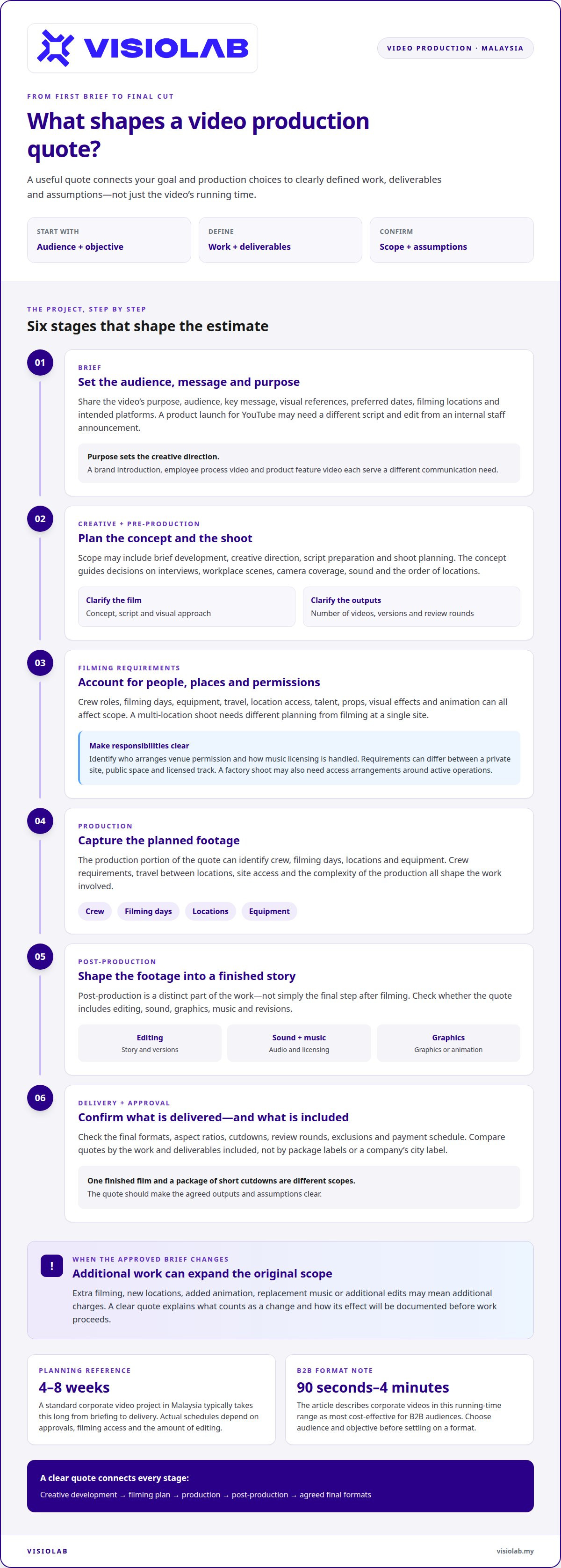
Purpose sets the creative direction. A corporate video can introduce a brand to prospective clients, while a brand film can build a broader view of its identity. An internal video may explain a process to employees; a product video can focus on features for buyers. For B2B audiences, corporate videos are described as most cost-effective when they run between 90 seconds and four minutes. Choose the audience and objective before deciding the format.
When getting a video production quote in Malaysia, define the audience, message, locations and deliverables first. These details give the production team a practical basis for planning the script, filming and post-production.
An itemised quote links each production task to a defined output. Before approving the work, compare the scope, exclusions and payment schedule.
A video production company prepares a custom quote by translating your brief into creative, production and delivery tasks. Share the video’s purpose, audience, key message, visual references, filming locations, preferred dates and intended platforms. For example, a product launch video for YouTube may need a different script and edit from an internal staff announcement.
The quote should identify each deliverable and the assumptions behind it. Check the planned filming days, crew roles, script development, equipment, editing, graphics, output formats and review rounds. If the brief changes from one finished film to several versions, the scope should reflect the additional work.
Location access, travel, filming duration, crew requirements, talent, props, visual effects and animation can all affect a quote. For a factory shoot, the plan may need to account for access arrangements and filming around active operations. Identify music selection and licensing, talent releases, location permissions and any site-specific approvals in the quotation.
In Malaysia, filming permissions and music rights depend on the location and material used. The production plan should identify who arranges venue permission and how music licensing is handled. Requirements can differ between a private site, public space and licensed track, so make responsibilities clear rather than assuming one permission covers every situation.
Useful itemised lines can include:
• Pre-production: brief development, script and shoot planning.
• Production: crew, filming days, locations and equipment.
• Post-production: editing, sound, graphics, music and revisions.
• Delivery: agreed aspect ratios, file formats and cutdowns.
Additional charges may apply if the approved brief changes. Extra filming, new locations, added animation, replacement music or additional edits can expand the original scope. A clear quote explains what counts as a change and how its effect will be documented before work proceeds.
A standard corporate video project in Malaysia typically takes four to eight weeks from briefing to delivery. Actual schedules depend on approvals, filming access and the amount of editing. Payment terms vary by project, so the quotation should state its payment milestones, due dates and any conditions tied to approval or delivery.
For a project with several deliverables, a clearly scoped video production plan can connect the visual direction, filming needs and final formats in one quotation.
Production captures the planned footage; post-production shapes it into a finished story. A clear scope connects the concept, shoot plan, edit and final versions so every stage supports the same audience and message.
Creative direction turns a brief into a visual approach. For a recruitment film, that might mean choosing employee interviews, workplace scenes and a narrative script. The production team then plans the shoot around those choices, including interview setups, camera coverage, sound and the order of locations. A focused concept guides decisions on set and gives editors material suited to the intended story.
Production costs reflect more than camera time. Crew roles, filming locations, lighting, sound recording, talent and the complexity of the action all shape what needs to happen on set. A single interview with one speaker calls for a different setup from a sequence across several workplaces. Planning these details before filming helps the crew capture usable footage and avoid preventable gaps.
Post-production can represent 30-50% of the total project cost on complex corporate video productions. Editing may involve selecting interview takes, building a narrative, balancing sound, colour grading footage and adding motion graphics. A project with animated diagrams or several layers of visual effects needs more editorial work than a straightforward talking-head edit. The final cut is shaped by the material, the story and the finish required.
Revision rounds also affect the post-production plan. Standard corporate video quotes typically include three to six rounds of revision. A round may cover consolidated feedback on a cut, such as adjusting a title, reordering a scene or refining narration. Clear approval stages help keep comments aligned: first on the story structure, then on details such as graphics and sound. Changes to the agreed concept can require additional editing.
One filmed project can produce more than a single master video. SCM Asia recommends turning one full corporate film or testimonial shoot into 5-10 social-ready clips. That approach requires planning for shorter narratives, portrait or square framing, captions and platform-specific lengths. Clips work best when the original shoot captures several distinct messages, rather than relying on the editor to invent new moments from limited footage.
Finishing choices should suit the viewing context. A cinematic grade may support a dramatic brand film, while a clear, restrained look can suit a practical internal message. Sound mixing, subtitles, logo placement and export formats also shape the final delivery. Each extra version adds editing and quality-control work, so the quote should identify the master video and its cutdowns separately.
To assess the full scope, map each stage to an output: concept and script, filmed material, edited master, graphics, review rounds and final formats. This makes the production plan easier to evaluate and shows where creative choices add meaningful work.
Start with the business outcome, then shape the video around it. A recruitment film, for example, needs to show workplace culture and give prospective employees a clear reason to learn more. A product launch video may instead focus on a new feature, how it works and the audience it serves. The objective guides the concept, production choices and final deliverables.
Define the primary audience before choosing a style or format. A video for senior decision-makers may need a concise business case and customer proof. A staff training video may need clear demonstrations and a sequence employees can follow. These needs affect the script, interviews, filming plan and editing priorities, even when the subject is similar.
Choose the main distribution channel early. A film intended for a company website can use a different frame and pacing from short social media edits. If the footage must support several channels, plan the shoot with those versions in mind. This helps the team capture usable material rather than forcing one edit into every placement.
A well-produced corporate profile video can serve a business for three to five years across multiple channels. That longer use makes durable messaging important: focus on the organisation’s purpose, strengths and people, rather than details likely to change quickly. A launch video has a different life cycle, so its concept can centre on the product moment and campaign timing.
Prioritise what the audience must understand. For a new service, the essential sequence might be the customer problem, the service response and the next action. For an ESG story, the narrative may need evidence, context and relevant voices. Each additional message competes for attention and can add scripting, filming or editing work.
Separate core deliverables from optional extensions. A practical brief might identify one master film as essential, then list social media cutdowns, alternate openings or subtitles as separate outputs. This makes trade-offs visible. If the budget changes, the team can protect the central story while adjusting secondary formats or creative elements.
Use these planning steps to connect spending with purpose:
• State the business objective and the audience’s intended response.
• Name the primary channel and any secondary placements.
• Prioritise the messages, visuals and people the story needs.
• Define the master video, versions and editing outputs.
Measure success against the objective, not views alone. A sales-focused video might support product enquiries, while an internal film may help employees understand a process. Agree on the intended outcome before production begins, then match the concept, final formats and evaluation approach to that goal.
The scope begins with the story the video must tell. A product launch film needs a different production plan from a leadership message or customer case study. The number of subjects, locations and visual elements shapes preparation and filming. A quote becomes clearer when the brief identifies the central message and the people who need to appear.
Access and logistics matter too. Filming at one office differs from coordinating interviews across several sites in Malaysia. Travel, equipment movement, site schedules and time available with interviewees affect the shoot plan. A production team can scope each location and filming requirement against the schedule before estimating the work.
Content readiness influences how much development is required. A business with an approved script and spokesperson may need less preparation than one still shaping its message. Product specifications, technical explanations and stakeholder input can also affect research and scripting. For example, a video explaining a complex service may need expert interviews and visual demonstrations to make each step understandable.
Creative ambition changes the production approach. A filmed interview with supporting workplace footage uses a different visual plan from a concept built around animation, staged scenes or detailed product demonstrations. The quote should connect each creative choice to the work involved, including preparation, crew needs and post-production. This makes the relationship between the idea and its execution clear.
Deliverables can expand the scope beyond one master edit. A campaign may need a full-length version, shorter social cuts, alternate openings or adaptations for different audiences. Each version requires editing and review. If one launch film must speak to both customers and employees, distinct edits may communicate each message more clearly than a single cut.
Approval structure is another practical factor. A project with input from marketing, product, legal and senior leadership needs a defined route for decisions. Consolidated feedback helps the editor work from one direction. Late changes to approved messaging, product visuals or narration can alter the edit and delivery plan, so the quote should explain how scope changes are managed.
Use these details to build a useful brief:
• State the audience, business objective and core message.
• Identify interviewees, locations and access constraints.
• Describe required visual elements, from demonstrations to animation.
• List final versions, platforms and approval stakeholders.
These details let the production team assess the work behind the finished video, rather than treating every project as the same package. For a quote shaped around your brief, discuss your video production requirements.
VISIOLAB helps Malaysian organisations turn complex messages into clear, purposeful video content. Define your objective, audience and preferred deliverables, and VISIOLAB can shape a scope around the work required, from creative development through final edits.
For a company profile, employee learning or a message about environmental and social priorities, the right format depends on what viewers need to understand. VISIOLAB produces Corporate Video, Explainer and Training Video, ESG Video and Safety Video. Each project starts with the story and audience, then aligns production choices with the intended outcome.
If you’re ready to discuss your brief and quotation, contact VISIOLAB.
Turn your video idea into a brief that defines the audience, purpose and intended use. This gives the production team a clear foundation for shaping the creative direction and outlining the work behind the final video. A focused brief also helps stakeholders agree on what the video needs to achieve before production begins.
Getting a video production quote in Malaysia is more purposeful when the brief connects the message to a business objective. VISIOLAB produces Corporate Video, Explainer and Training Video, and ESG Video for organisations that need to communicate clearly with employees, customers or other stakeholders. The right format depends on the story you need to tell and the audience you need to reach.
Bring your goals and project requirements together, then contact VISIOLAB about your project to discuss the next step. A clear starting point can help turn a complex message into a focused, engaging video.
There isn’t one average that accurately represents every production. VISIOLAB’s project budgets typically start between RM30 k and RM60 k, with the final scope depending on the brief and production requirements. A straightforward interview-led film and a project involving animation or multiple locations require different work. Treat the starting range as a planning reference, then define your intended deliverables and creative approach for a project-specific quotation.
Costs vary by format and scope, and no separate fixed rate applies to each category. VISIOLAB’s project budgets typically start between RM30 k and RM60 k. An event film, social media edit or corporate profile can involve different filming, editing and delivery requirements. Specify whether you need one finished video or several versions, and describe the production approach, so the quote reflects the actual work rather than a generic category.
A useful quotation defines the work and the finished materials, rather than naming only a video type. Look for creative development, scripting, production, editing, review stages and delivery formats where they apply to your project. VISIOLAB includes up to 5 rounds of client reviews in its standard scope. For example, a quote for an interview film should clarify whether it covers interview filming, supporting footage, captions and a final version for your intended channel.
Additional charges depend on the agreed scope. Travel between filming sites, hired talent, specialist equipment, location access, extra filming and changes to the approved brief can affect the project. Ask for applicable items to appear as separate lines, with their purpose and conditions explained. For example, a shoot at an external venue should state whether venue-related costs are included or handled separately.
Provide the objective, audience, core message, intended platforms and required deliverables. Add any available script, visual references, product details, filming locations, preferred schedule and key stakeholders. For example, a product demonstration brief should identify the features viewers need to understand and whether production requires live footage, animation or both. Clear information helps define the work and identify decisions that could change the scope.
Revision allowances differ between production scopes, so read the quotation’s review terms. VISIOLAB includes up to 5 rounds of client reviews in its standard scope; additional rounds may incur minimal fees. The quotation should explain what counts as a review round and how feedback is submitted. For example, consolidated comments from stakeholders on one draft create a clearer review cycle than separate, conflicting instructions arriving at different times.
Compare deliverables and assumptions line by line, not just the headline total. Confirm the filming scope, editing, formats, included review rounds, music or location arrangements, payment milestones and process for approving additional work. A quote that includes several cutdowns differs from one covering only a master video. Ask for exclusions and change procedures to be set out clearly, so you understand what the agreed scope covers before production begins.
Let’s create and collaborate
We’re versatile multitaskers, and we thrive on a lot of projects. You've seen a few of our works that we are most proud of, and your project could be next in line.

Empowering brands with captivating visual stories, creating strong connections and growth.
