


Malaysia now has its own edition of the ZEISS Quality Excellence Center video, taking its place alongside the Singapore and Vietnam versions in the brand's regional series. The completed explainer launched publicly and was published by ZEISS Industrial Quality Solutions to its audience of more than 105,000 followers on LinkedIn, with the client team thanking VISIOLAB for bringing the project to life. The film was also screened at the METALTECH manufacturing trade show, while the wider content suite of photography and short focus-area videos continues to support the center's marketing across channels.
The client was highly engaged throughout the production and expressed strong satisfaction with the final outcome, reinforcing VISIOLAB's standing as a trusted partner for multinational clients producing technical content under a tight production window.
-2025-03-20-16h12m11s360.avif)
Commissioned by REDtone and HumanCapient Consulting under Jabatan Digital Negara, the MyGovUC 3.0 Corporate Video aimed to promote the government’s digital transformation by showcasing the largest adoption of Google Workspace across multiple agencies. The challenge was to create a compelling video that not only demonstrated real-world use cases but also highlighted the system’s efficiency, security, and collaborative capabilities. Given the involvement of various government agencies, the production required careful coordination, adherence to strict security protocols, and a seamless narrative that resonated with different stakeholders.
To effectively address these challenges, VISIOLAB adopted a multi-layered strategy:
VISIOLAB executed the project with precision, ensuring high production quality and an impactful storytelling approach:
The MyGovUC 3.0 Corporate Video successfully met its objectives, driving awareness and adoption of Google Workspace within government agencies:
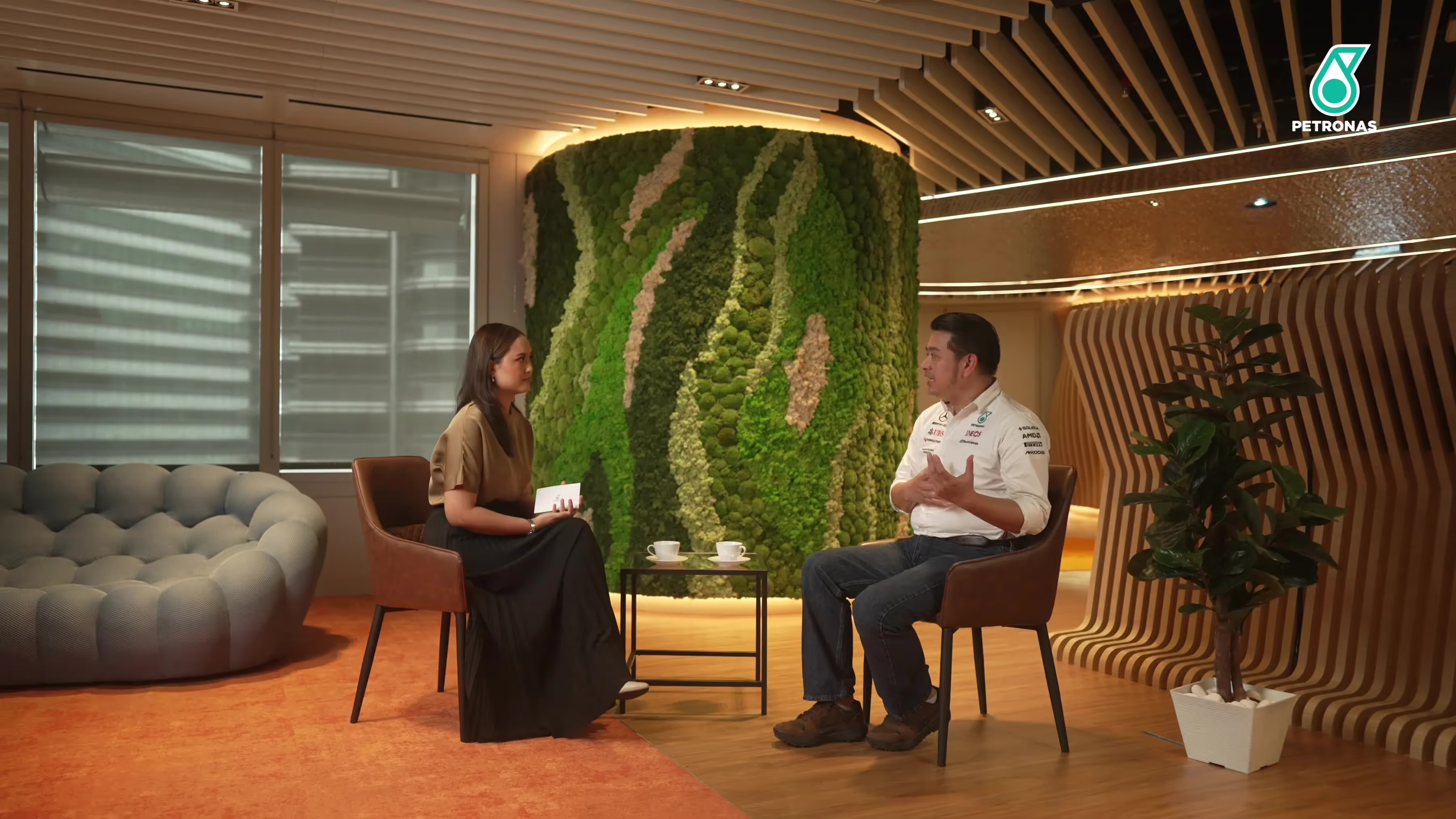
PETRONAS sought to showcase two flagship digital transformation initiatives in a concise, compelling format for internal stakeholders. Each project involved complex technical concepts and multiple site locations, requiring a storytelling approach that clearly communicated purpose and impact.
VISIOLAB’s approach centered on a narrative-first, customer-centric strategy:
Over a multi‑week production schedule, our team filmed on location across Kuala Lumpur and Bintulu, capturing expert interviews, operational footage, and contextual b‑roll. In post‑production, we integrated bespoke motion graphics, dynamic sound design, and a consistent visual identity — ensuring both videos felt polished, engaging, and on‑brand.
VISIOLAB delivered two high‑impact corporate docuseries that have been widely adopted by PETRONAS leadership as core internal communications assets. Both videos successfully elevated awareness of each initiative’s value, strengthened stakeholder alignment, and reinforced PETRONAS’ reputation as an innovation leader.
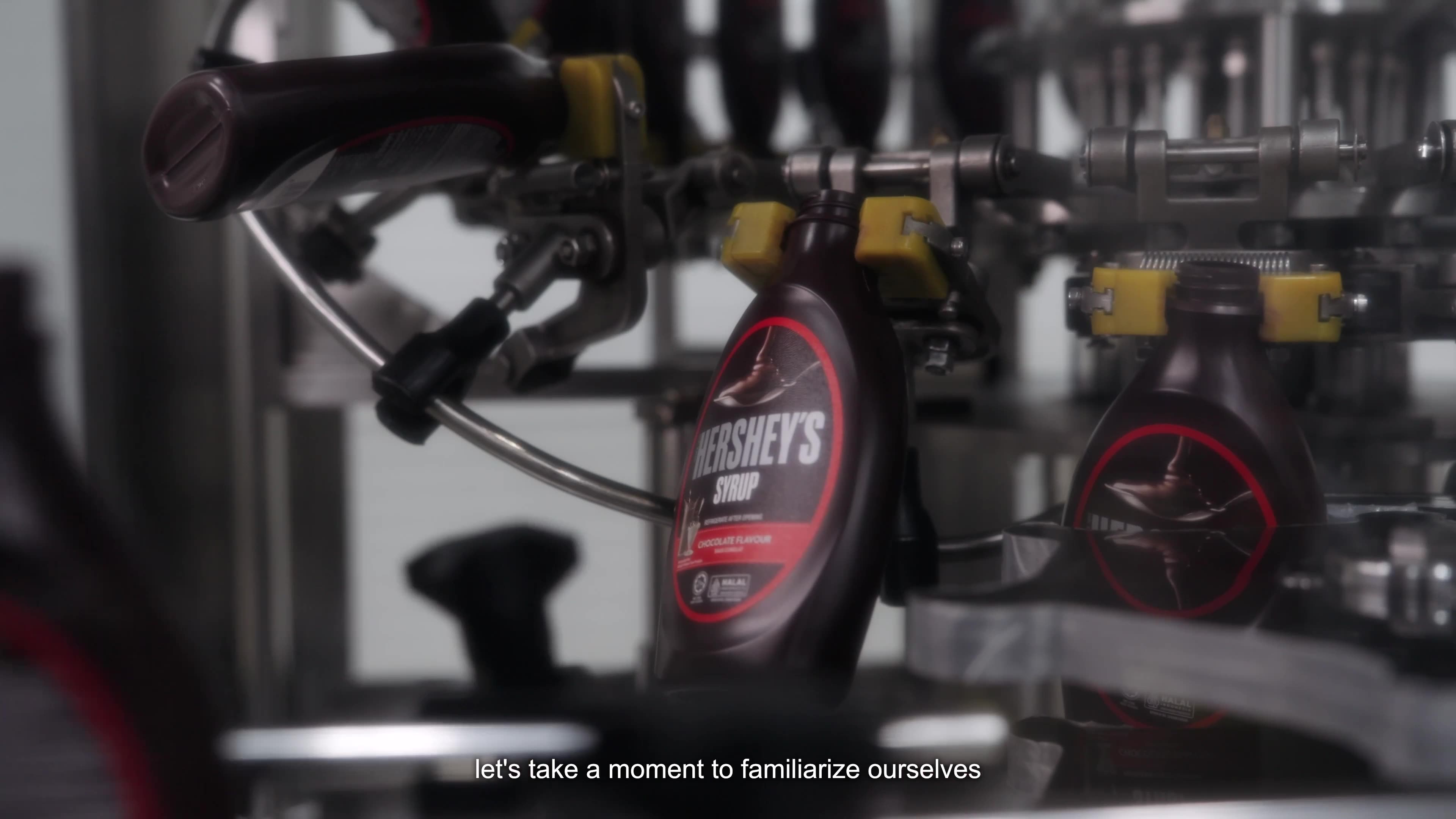
The difficulty in this kind of film is rarely the shoot. It is the density, made heavier here by the dual mandate. The source content ran to twelve distinct topic areas that alternate between two disciplines: occupational safety on one side (life-saving rules, hazard awareness, emergency evacuation) and GMP and food safety on the other (zone-based dress code, hygiene and restroom protocol, chemical and allergen control, food-safety culture), bridged by shared entry procedures like visitor and contractor management and equipment declaration. Each area carried its own lists: prohibited foods and items, prohibited footwear, required PPE [personal protective equipment], the seven safety features, the three assembly points, the RACE steps, the allergen colour codes. Read aloud in full, that is a lecture, not a film, and viewers stop absorbing it long before the end. The added risk was that a viewer might mentally file the video as "just the safety part" or "just the hygiene part" and tune out the other.
On top of the content load, the production had to happen inside a live, hygiene-controlled GMP facility. That meant filming in an environment with its own access, gowning, and cleanliness rules, staging real staff and contractors rather than actors, and keeping the shoot from interfering with the floor's actual operation.
The solution was to split the workload between voice and image. The voiceover was written to stay conversational and to guide the viewer through the site as a journey, arriving at the gate, registering, gowning up, moving onto the floor, and finally responding to an emergency and exiting safely. The detailed, list-based compliance content was pushed into motion-graphic supers and iconography, so the narration could stay light while the screen carried the specifics.
Structurally, the film follows the real path a person takes through the facility, which is what lets the two mandates sit together without feeling like two separate videos. A person arriving on site does not experience "safety" and "GMP" as different sessions; they gown up, wash, watch for forklifts, and handle product in one continuous flow. Mapping the film to that flow gives the dense material a natural spine: entry and registration, then declaration and dress code, then hygiene and restroom protocol, then life-saving rules and hazard awareness, then emergencies and evacuation, closing on food safety and the site's quality culture. To hold pace across nearly a hundred short shots, the edit leans on match cuts and transitions (a welding spark cutting to the next scene, a forklift wheel matching to a forklift wheel, a red emergency button cutting to a red light), so the sequence keeps moving instead of feeling like a checklist. The tone deliberately stays welcoming, in keeping with the "Be Safe With Us" line, so that safety reads as shared care rather than as compliance policing.
The finished film runs as one continuous walkthrough, built from the storyboard's twelve segments.
Introduction. An establishing drone shot of the Senai plant match-cuts off the Hershey logo into b-roll of chocolate production and employees at work, over the welcome line and the film's title card, "Hershey Malaysia Safety Induction Video." The register is set early: this is a proud site, and safety and quality are part of how it runs, the two threads the rest of the film will carry together.
Visitor and contractor procedures. The film follows the entry journey. Security receives notice of a visit, a contractor's work permit is approved through the Contractor Management System, visitors register and receive an identification tag, and a host delivers the safety briefing. Supers carry the acronyms (MOS, JSA, PTW) and the smoke-free, alcohol-free, prohibited-items rules, including a clean graphic pass over prohibited foods and personal items.
Equipment and chemical declaration. Close-ups of declared equipment and inspection cover the rules for wood, glass, and hard plastics, the prohibition on animal-source brushes for Halal integrity, and the chemical declaration path: Safety Data Sheet, Chemical Control Committee approval, and GHS labelling.
Dress code and GMP. A full-body reveal of a gowned contractor anchors the required-wear list, from grey smock and hair net to safety helmet, earplugs, and captive shoes, with dedicated shots for beard nets, face masks, shoe covers, prohibited footwear, and the lint-roller and air-chamber routine.
Hygiene, health, and restroom protocol. Handwashing, shoe sanitising, the "Am I fit to work today?" self-check, and the occupational health nurse consultation lead into the restroom protocol: removing and hanging GMP uniforms, washing and sanitising, and retrieving protective gear before re-entering the floor.
Life-saving rules and hazard awareness. A diagram chart introduces the life-saving rules, then a rapid run of real tasks illustrates each one: confined space entry, lock-out / tag-out, fire and explosion prevention, electrical safety, safe mechanical lifting, driving, industrial vehicle operation, machine guarding, and working at height, closing on the permit-declaration requirement. Hazard awareness follows on the floor: forklift movement, overhead loads, pedestrian lanes, clear fire exits, and emergency stop buttons.
Emergency procedures. The evacuation sequence covers zone awareness, the seven safety features, the RACE procedure (Rescue, Alarm, Contain, Extinguish), the walk-don't-run rule, the three designated assembly points, role-based assembly, ID-card scanning for headcount, and waiting for clearance to re-enter.
Food safety and colour-coding. The film closes its instructional arc on food safety: the "see something, say something" principle, Hershey's Super 6, allergen awareness, and the strict colour-coding system for food-contact tools that prevents cross-contact.
Closing. The last segment returns to people: an employee holding a Hershey product, teams working together, the food safety and quality motto "I own it, I live it," and the closing line to make safety part of every moment, resolving on the Hershey logo.
The film became Hershey Malaysia's standard safety and GMP induction asset: a single, repeatable briefing that can be shown to every visitor, contractor, and new starter before they enter the production floor, in place of an ad hoc verbal walkthrough. Standardising both mandates in one film means the same occupational-safety and food-safety protocols, in the same order, reach everyone who sets foot on site, which is exactly what a combined safety and GMP programme depends on.
Because the video is an internal induction asset rather than a public campaign, it is used at the point of entry and in onboarding rather than distributed on social channels.
Let’s create and collaborate
We’re versatile multitaskers, and we thrive on a lot of projects. You've seen a few of our works that we are most proud of, and your project could be next in line.

Empowering brands with captivating visual stories, creating strong connections and growth.


.svg)

.avif)